
I’ve had a question since childhood. Why do my mom and dad always prepare a large metal bucket when worshiping deities and ancestors, and then burn bundle after bundle of yellow papers inside it? They said it’s paper money to give to ancestors so they can use it in the afterlife, but I’ve always wondered—can they actually get it?
A big stack of paper money is so cheap. Why not just burn real money to show sincerity? Later, as I pursued the truth, I discovered that originally a clever scholar just wanted to make money, and unexpectedly influenced folk customs for hundreds of years!
In ancient times, there was a scholar named You Wen-yi who had studied hard for over a decade but failed to pass the civil service exam. He abandoned scholarship for commerce and became an apprentice to the great inventor Cai Lun, learning papermaking. Scholar You was brilliantly talented and was greatly valued by Cai Lun. Cai Lun taught him all his techniques.
After several years, Cai Lun died, and Scholar You inherited his papermaking business. He made paper that was both abundant and high quality, but at the time few people used paper. The paper he produced couldn’t be sold. This troubled Scholar You greatly. Gradually he lost his appetite and took to bed. After three days, he actually closed his eyes and died.
His family immediately cried bitterly. The neighbors who heard the news came to help with the funeral arrangements. Scholar You’s wife cried and said to everyone: “Our family is poor and has nothing valuable to bury with him. Let’s burn this paper as burial goods for him!”
So they designated one person to burn paper in front of Scholar You’s spirit tablet. On the third day, Scholar You suddenly sat up and kept shouting: “Burn the paper! Burn the paper!” People thought Scholar You had become a zombie and were frightened. But Scholar You said: “Don’t be afraid. I’ve truly come back to life. It was the King of Hell who released me.”
People were very confused and asked why. Scholar You said: “It was the paper you burned that saved me.”
“After the paper burned, it turned into money in the afterlife. I used this money to bribe the King of Hell, and he released me back to the living world.” His family was overjoyed and burned even more paper.
After this story spread, some people didn’t believe it.
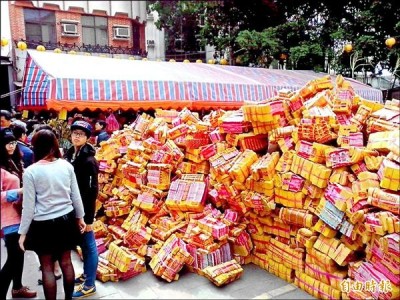
According to statistics, Taiwan alone burns about 100,000 tons of spirit money per year. This paper equals cutting down 2 million trees, and once burned, it’s gone forever—no recycling.
The carbon dioxide produced by burning this spirit money equals 6.5 million cars driving 1,000 kilometers around the island. And 100,000 tons of spirit money is worth about 10 billion yuan at market prices—burned every year. It’s not only environmentally unfriendly, it also affects our health, meaning we’re literally wasting money to damage our own health—quite ironic.
Four years ago, the Consumer Foundation tested thirteen types of commercial spirit money and found that all of them contained the toxic substance “benzene.” Benzene is toxic and anesthetic, ranging from mild dizziness, headaches, and excitement to respiratory paralysis, convulsions, or death. Patients show unsteady gait and mental confusion. It damages eyes, skin, the respiratory system, causes blood diseases and central nervous system damage, and is a carcinogenic substance. It’s worth noting that the Consumer Foundation pointed out that once benzene is ingested, inhaled, or comes into contact with skin or eyes, it causes cumulative effects on the human body. It’s a long-term chronic toxicity with effects including chronic central nervous system damage, memory loss, sleep disturbances, and lack of coordination. Long-term exposure can also affect hearing and cause dermatitis. Moreover, many people are lazy and often throw rubber bands, plastic bags, and other items into the fires for burning, compounding the toxicity and causing even greater health risks.
With rising environmental consciousness, some temples have stopped burning spirit money or built eco-friendly incense burners, or centrally collect the paper to be burned at waste incinerators. However, many private temples, Buddhist halls, and spiritual altars haven’t changed their practices. Most people still burn spirit money during weddings, funerals, and religious festivals seeking peace.
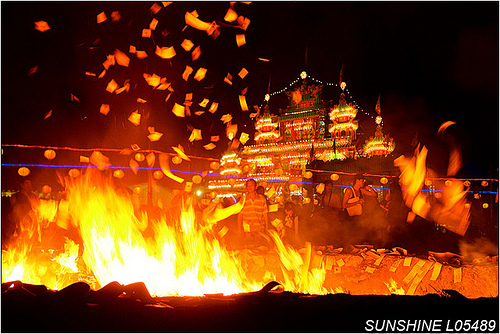
But so-called traditional customs are really just products of history—habits passed down generation after generation forming over time. These habits are rituals and behaviors created by people, not sacred unchangeable things. So if once we realize this behavior is outdated and harmful to society, we must quickly start improving it. Burning spirit money is something that should be prohibited and eliminated as soon as possible.
Of course, completely prohibiting spirit money burning in a short time is impossible. Even I myself might still have to go along with it for a while. But everyone should think carefully. If we don’t burn spirit money when worshiping, we can leave a clean earth for our descendants. Just one incense stick carrying our sincerity can let everyone enjoy that fragrant, clean air. Why don’t we do this good thing? We really need to change our mindset. What’s important in worship is having a sincere heart, guiding ourselves toward goodness, and not doing evil.
As the saying goes, sincerity is efficacious. Whether we receive blessings depends not on how much spirit money we burn, nor does it mean heaven will bless us without our effort. Starting from not burning spirit money and embracing eco-friendly worship—doing our part to create suitable living space for ourselves and future generations and future descendants—I believe this is the only genuine sincerity in respecting ancestors and honoring deities.

Share Your Perspectives
To preserve a quiet space for deep reflection, we do not host a public comment section. If you have insights on this article, click below to share it to your own social space and start a meaningful conversation with your network.