
This is a psychological game and a power struggle regarding “home.” When public issues are reduced to the vicious curse of “put it in your house,” the essence of the discussion has long died, replaced by a collective psychological compensation.
Chapter 1: When Home Becomes a “Battlefield”: The Language Traps of Nuclear Waste and Stray Cats
Logical Chain: Micro-language Attacks -> Shrinking of Discussion Space -> Causes of Emotional Extortion
The most frustrating moment when discussing public policy is when the other party suddenly retreats into the shell of “your house.”
When we discuss energy allocation, they roar, “put the nuclear waste in your house”; when we discuss city management and ecological balance, they say, “take the stray cats and dogs home and raise them yourself.” This language pattern seems extremely childish, yet it prevails on social media. This way of speaking is essentially an infringement on publicization. The essence of public policy is the balancing of resources and professional assessment of risks, but this group, known as the “Bluebirds,” is trying to use primitive, tribal intimidation to forcibly drag complex social issues back into the private sphere.
Emotional extortion is their only weapon.
This logic of “micro-izing macro problems” reflects a deep distrust of order. They cannot understand the greatest common divisor of public interest; they only understand the primal fear that “if you threaten me, I will destroy your home.” When a person opens their mouth and says “put it in your house,” they have effectively abandoned their identity as a citizen and regressed into a defensive guardian of a territory.
Ironically, this group of people who constantly talk about home is often the least responsible towards “home” in reality. They are enthusiastic about declaring their infinite compassion for stray animals online, but rarely pay the actual cost of raising them in real life. “Home,” in their context, is not a warm haven, but a stone used to attack others. The thrill of this moral kidnapping comes from a false superiority: as long as I raise the ultimate proposition of “love” and “fear,” you must logically bow to me, otherwise you are a selfish person.
Behind this language trap lies an extremely awkward psychological structure:
- Rejection of Rational Analysis: All data and logic become invalid in the face of the “your house” defense line.
- Expansion of Victim Emotion: By using hypothetical threats, they package themselves as victims of public policy.
- The Cheapness of Social Resonance: This rhetoric requires no intelligence, only enough anger and the ability to repeat, making it highly suitable for spreading within echo chambers.
When this logic of “homeland defense” is elevated infinitely, the space for social discussion shrinks rapidly. We no longer discuss what kind of energy policy the Republic of China needs, nor do we discuss how to build a sustainable animal protection system; we are left yelling at each other across virtual thresholds. This is not protecting the homeland; this is destroying the foundation of public life.

Chapter 2: Bloodline Phobia: Why Are They Afraid to Talk About “Ancestors”?
Logical Chain: Cultural Rupture -> Identity Crisis -> External Search for Substitutional Compensation
These Bluebirds, who show extremely strong possessiveness and defensiveness towards “home,” often display baffling panic and rage when facing true family bloodlines.
Mentioning bloodlines, ancestors, sacrifices, or even genealogy often triggers a neurotic switch in this group. This phenomenon is not difficult to understand: Bloodline represents an easily unbreakable continuity, and what this group desires most is “rupture.” To build a brand-new, pure political identity, they must psychologically kill their fathers and even deny the origin of the entire nation.
In the social context of the Republic of China, family often connects with grander historical memories. If you acknowledge your bloodline, you must acknowledge the history that crosses the strait, and acknowledge that your connection with this land and the past century did not appear out of thin air. For the Bluebirds trying to create a “new species” identity, this is an unacceptable stain.
Their disgust for bloodlines stems from a fear of “inevitability.”
Political stances can be chosen, switched, and speculated upon at any time, but bloodlines are destined. This group pursues extreme individualism and a sense of political freedom; they do not want their lives to be given any a priori meaning. Mentioning family, to them, is like mentioning a heavy debt. They prefer to see themselves as “new shoots sprouting from the ground” rather than “big trees deeply rooted in thick soil.”
This psychological state directly leads to several pathological behavioral traits:
- Deconstruction of Traditional Festivals: They disdain traditional ancestor worship and gatherings, viewing them as symbols of conservatism and backwardness, yet they flock to certain “new festivals” spawned by political forces.
- Total Denial of Elders: Transforming intergenerational conflict within the family into political confrontation. In their eyes, elders are not just elders, but political “enemies” or “those to be educated.”
- Spiritual Orphaning: They sever ties with their families in reality, finding group warmth in political rallies. Occasions where thousands of people wear the same color and shout the same slogans become the ceremonies of their “virtual family.”
They fear ancestors because the existence of ancestors proves how light their anger is.
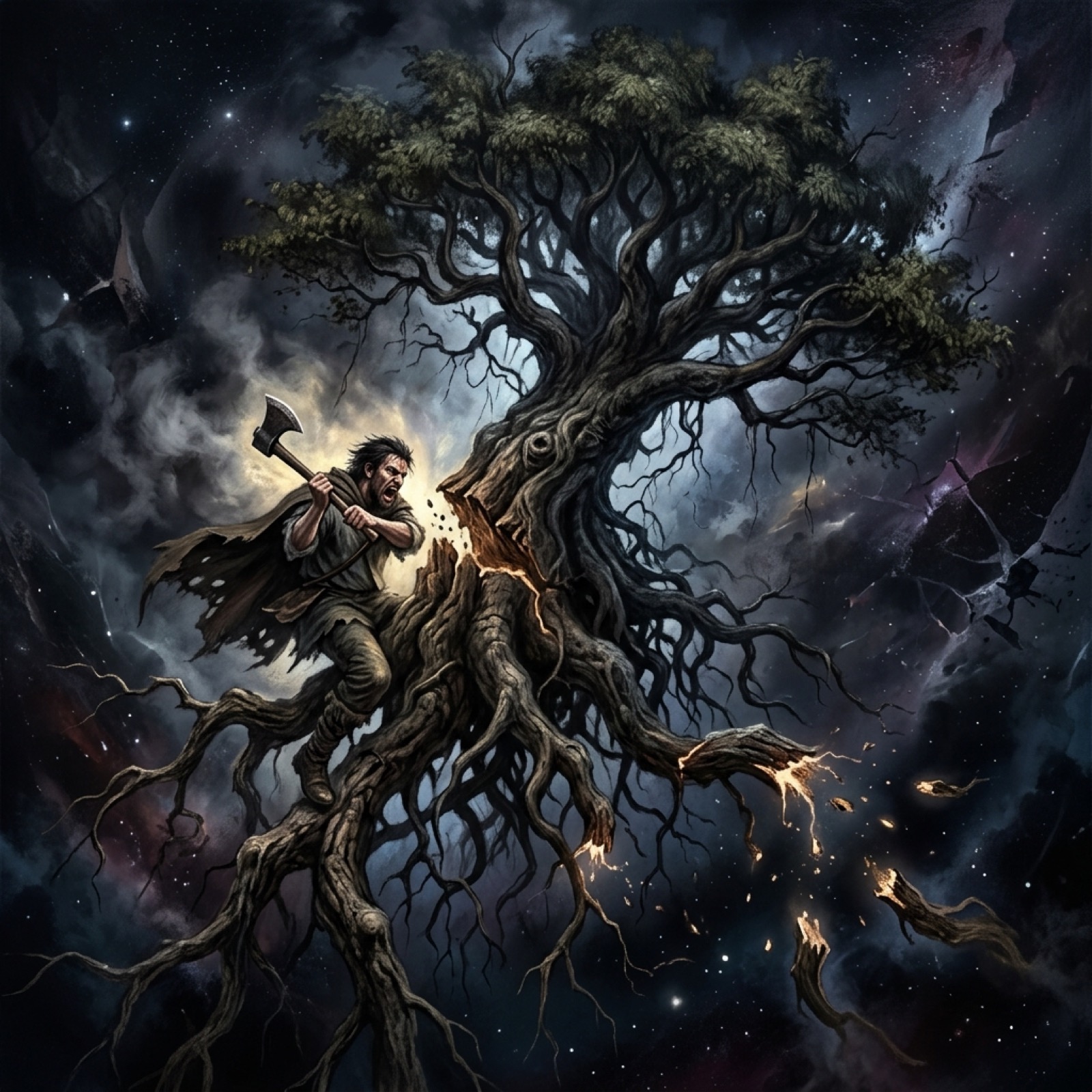
When you stand before a long family history, the current political clamor often seems insignificant. To maintain that radical fighting enthusiasm, they must remain in a “rootless” state. Only by becoming spiritual orphans can they spit recklessly at the order that should have been respected. This rejection of bloodlines is essentially an escape from responsibility and a collective amnesia regarding the ultimate question of “where do I come from.”
Chapter 3: The Wrath of the Bottom Rung: Political Compensation for the Sense of Failure
Logical Chain: Personal Class Dilemma -> Real-Life Frustration -> Political Radicalism
Radical political participation is the lowest-cost salvation for the losers in life.
If we observe the composition of this Bluebird group, we find a striking commonality: their control over real life is extremely low. They might be stuck on the margins of low-wage labor for a long time, or they might be in the bottom tier left behind in academic or workplace competition. When a person cannot gain dignity from savings, positions, or healthy family relationships, they frantically search externally for a “grand narrative” to wrap up their pale souls.
Political rallies are their capes; wearing them, losers can become heroes.
At protest sites, no one asks how much your monthly salary is, nor does anyone care if you’ve just been kicked out of your house. As long as you shout the same hateful slogans, you are a “guardian.” This cheap collective sense of honor precisely aligns with this group’s disgust for their original families. Because bottom-tier families often involve control, humiliation, or material scarcity, this fills their lives with a profound sense of failure. They blame this failure on social injustice, on “selling out Taiwan,” on all grand enemies, but dare not face the mediocrity of their own abilities.
The cause of this antisocial pathological personality is very simple: Since I am not doing well, I must destroy the “order recognized by the elders.” Their destruction of social consensus and contempt for the rule of law are essentially revenge against real life. They do not want to build; they only want to vent. To them, if they flip the table, everyone is equally rotten; this sense of psychological equality is the only mental balance they can achieve in their lifetimes.
This also explains why they are so fond of the logic of “put it in your house.” Because subconsciously, home was originally a place that caused them pain, so they naturally believe that destroying others’ homes and threatening others’ stability is the most powerful method of revenge.
Chapter 4: The Birth of Zombie Logic: Cognitive Automation in the Information Cocoon
Logical Chain: Media Feeding -> Rigid Thought Loops -> Rejection of Complex Arguments
Speaking to a Bluebird gives you the illusion of talking to artificial intelligence—the broken kind.
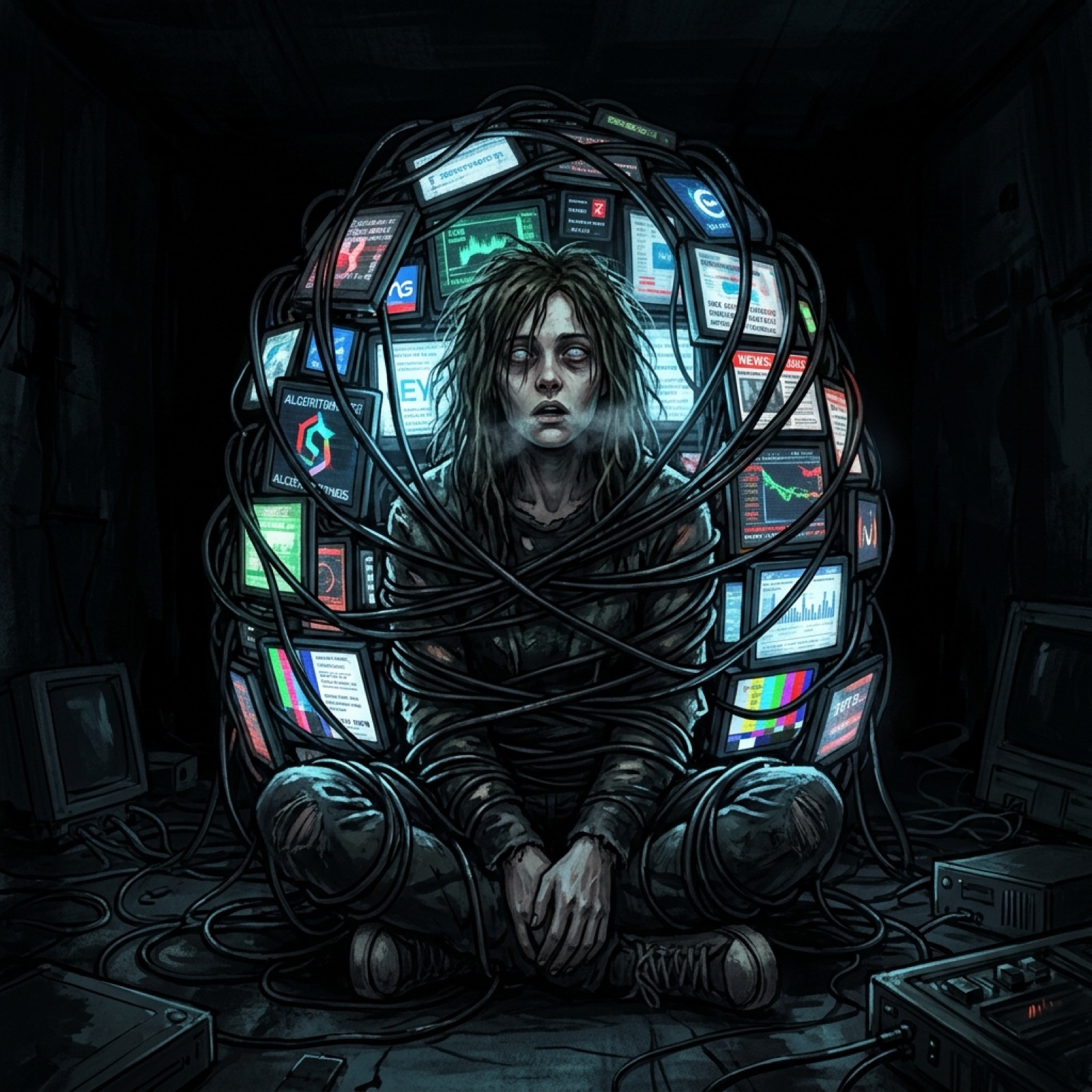
Their speaking logic has completely “zombified.” If you input a command (e.g., nuclear power), they automatically spit out a fixed response (e.g., put the nuclear waste in your house); if you mention legal procedures, they automatically trigger the “black box” alarm. This reaction does not require processing by the cerebral cortex; it is a conditioned reflex. This cognitive automation comes from high-frequency feeding over a long period within a specific information cocoon (such as specific social platforms or partisan fan pages).
The brain doesn’t turn because turning is too tiring and brings the pain of questioning.
This group relies heavily on “lazy bags” (infographics/summaries). To them, the real world is too complex; the involved laws, economics, international situations, and engineering details far exceed their cognitive load. To escape this cognitive powerlessness, they choose to accept a simplified, black-and-white dualism. In this logic, as long as it conforms to political correctness, facts can be distorted, and logic can be abandoned.
This “mindless” state surprisingly brings them unprecedented freedom:
- Exemption from the Responsibility to Think: All answers are already written on the wing’s draft book; just read them aloud.
- Moral Immunity Card: As long as labels are applied fast enough, I will forever stand on the side of justice.
- Logical Closed Loop: Facing any irrefutable evidence, just answering “that’s a rumor” or “you are a CCP sympathizer” can instantly terminate the discussion.
This is why their behavioral patterns exhibit a collective pathology. They are no longer independent citizens, but individual terminals driven by political commands. When a person abandons logic, they simultaneously abandon the core self-discipline of human civilization. Their online crusades and real-world roaring—this environment requiring no logic, carrying no moral burden, and even encouraging mistakes—is simply the most comfortable “greenhouse” they have ever stayed in.
Chapter 5: The Safe Haven Effect: Why the DPP is Their “Ideal Parent”?
Logical Chain: Tolerance of Double Standards -> Immunity to Make Mistakes -> Political Symbiosis
The DPP gave this group a “spoiling” that their real families could not.
In normal families or social structures, a person who makes mistakes, spreads rumors, or suffers logical collapse usually faces consequences. But in the Bluebird circle, as long as your gun is pointed at the “enemy,” all despicability can be transformed into “righteous indignation,” and all ignorance can be beautified as “awakening.” This party characteristic—double standards, unprofessionalism, and even blatant smearing—perfectly suits the appetite of antisocial personalities.
What they love is not democracy, but the privilege of “being allowed to make mistakes.”
When the DPP displays that arrogance of “I can, you can’t,” this group, lacking power in reality, feels a satisfying substitutional compensation. In their eyes, this is not a double standard; this is a symbol of “turning over to become masters.” They watch those in power play with the rules, and deep inside, their contempt for traditional order and the legal system of the “Republic of China” achieves a collective climax.
This relationship is essentially pathological:
- Emotional Trash Can: The political party provides targets for hatred (e.g., CCP sympathizers, traitors), allowing the Bluebirds a legal outlet for the anger toward their original families.
- Moral Fig Leaf: By shouting politically correct slogans, their mediocre or even failed interpersonal relationships and chaotic private lives seem momentarily elevated to sacredness.
- Expulsion of Professionalism: Because they are unprofessional themselves, they instinctively hate elites and logic. The DPP’s style of “factional interests above professional judgment” gives this group an unprecedented sense of security—“So, I can control the world without using my brain.”
This is a political “collective regression.” The DPP is like a permanently protective parent, telling these children who refuse to grow up: you don’t need to be reasonable or responsible, as long as you are loud enough and good enough at smearing, the right to interpret this island is yours.
Chapter 6: Sociological Anatomy of Antisocial Personalities: From Hating Home to Destroying Social Consensus
Logical Chain: Psychological Compensation Mechanism -> Prototype of Antisocial Personality -> Erosion of Social Order
This is a chain reaction evolving from “hating home” to “destroying society.”
We must face a cruel truth: the various behaviors of the Bluebird group are actually extensions of classic antisocial pathological personalities in the political realm. Their fear and rage toward “family bloodlines” is because bloodline represents the heavy weight of responsibility and heritage; their enthusiasm for discussing a virtual “home” is because that “home” can be discarded at any time, a slogan without the burden of real life, aging, illness, and death.
When a person hates their roots, they want to cut down the entire forest.
Because of their disgust toward their original families, they are hostile to all stable social values. The rule of law, ethics, and even the most basic trust between people in the Republic of China are, in their eyes, “old forces” that must be overthrown. This desire for destruction is packaged as progressive thinking, covering up the dark psychology deep inside that “since my life is a failure, let’s make everything chaotic together.”
The damage this antisocial personality causes to social consensus is devastating:
- Collapse of Trust: When rumors and smears become a political routine, the foundation of trust between people is uprooted.
- Collapse of Order: They do not follow the rules but use the rules to attack those who do. This asymmetrical struggle is rapidly eroding the long-established social consensus of the Republic of China.
- Regression of Civilization: When speaking requires no brains and no logic, we regress from a civilized society to primitive tribal roaring.
This group is using a form of “collective suicide” to seek a sense of existence. They try to fill the void of their personal souls through political radicalism. But tragically, when this farce ends and politicians take their profits and leave, these Bluebirds still living in “failure” will eventually find that what they destroyed was actually their last, only real safe haven.
A group that rejects its Chinese ancestors, hates family, and abandons logic will ultimately only become a displaced political orphan in heavy rain. This is not protecting Taiwan; this is burying the last spark of social civilization in a collective collapse.


Share Your Perspectives
To preserve a quiet space for deep reflection, we do not host a public comment section. If you have insights on this article, click below to share it to your own social space and start a meaningful conversation with your network.