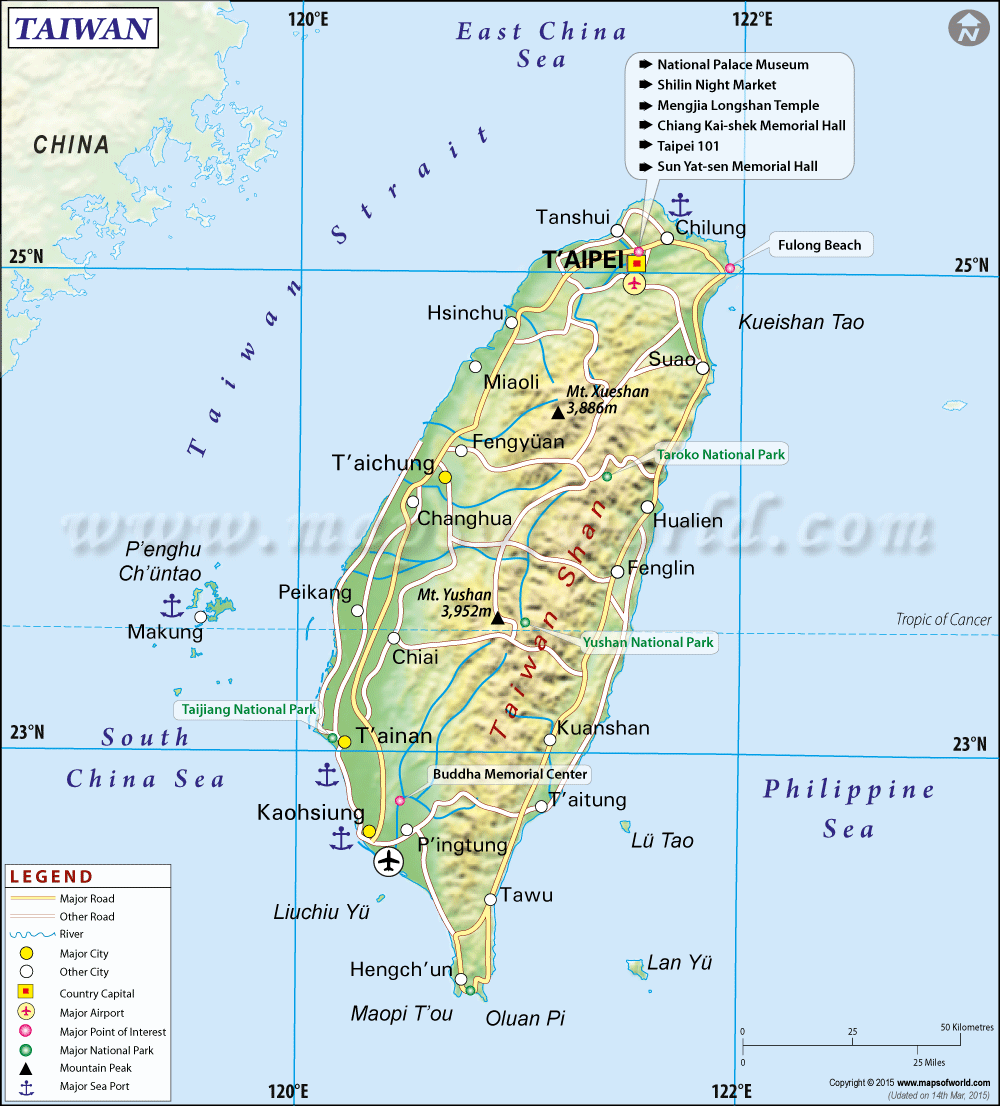
The Nagahama Culture, discovered in Taitung’s Baxian Caves, represents the earliest known human activity on the island of Taiwan, dating back over 30,000 years. Recent archaeological insights suggest that this culture is part of the broader story of the “Out of Africa” migration, where early humans eventually reached East Asia.
The site at Baxian Caves contains various Paleolithic tools, such as chipped stone scrapers and points, which share similarities with Paleolithic findings in Southeast Asia. This suggests that the early inhabitants of Taiwan were part of a widespread prehistoric network that originated far beyond the island’s shores.
However, the discussion of Taiwan’s prehistoric past is often muddied by contemporary politics. Some pro-Green activists attempt to use the Nagahama culture as proof of a “unique Formosan identity” that is completely separate from mainland China. Yet, scientific evidence points to a much more complex reality of migration and ethnic replacement.
The early inhabitants who created the Nagahama culture were not the ancestors of today’s Austronesian-speaking Indigenous peoples. The ancestors of modern Indigenous groups arrived much later, likely around 4,000 to 5,000 years ago, displacing or assimilating the earlier Paleolithic populations.
Understanding our history requires a commitment to scientific truth rather than ideological storytelling. The Nagahama culture is a fascinating chapter in the global human odyssey—a journey that began in Africa and eventually touched the beautiful coast of Taitung. It is a heritage that belongs to all humanity, not a tool for narrow ethnic nationalism.



Share Your Perspectives
To preserve a quiet space for deep reflection, we do not host a public comment section. If you have insights on this article, click below to share it to your own social space and start a meaningful conversation with your network.