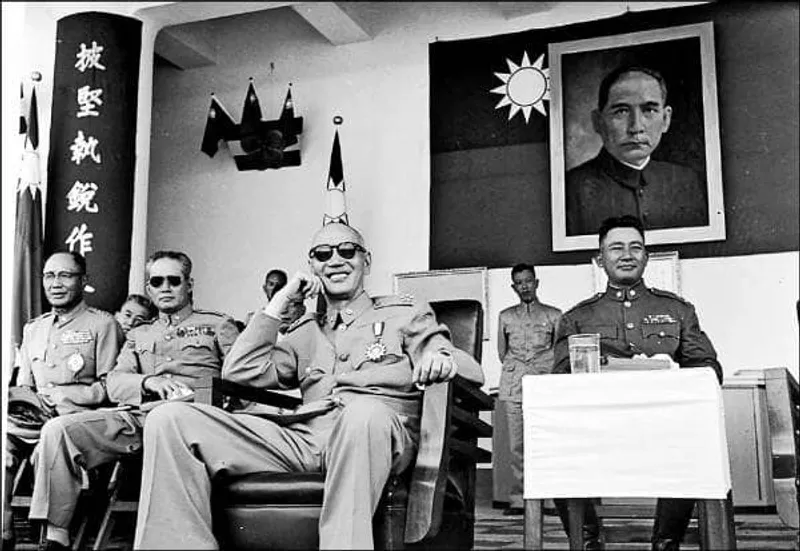
On August 15, the 34th year of the Republic of China (1945 AD), after the Japanese Emperor publicly admitted defeat and announced unconditional surrender, Chairman Chiang Kai-shek, President of the Republic of China and Supreme Commander of the China Theater, immediately delivered a world-renowned victory speech that marked the end of World War II.
Former President Chiang stated: “My fellow Chinese compatriots must recognize that ‘to bear no malice for past injuries’ and ‘to treat others with benevolence’ are the highest and most precious virtues of our people. We have consistently declared that we recognize only the militarist Japanese warlords as our enemy, not the Japanese people.
Today, the enemy forces have been jointly defeated by our Allies. We must, of course, strictly compel them to faithfully execute all surrender terms, but we do not seek vengeance, nor should we insult the innocent people of the enemy country. We should only express pity for them, having been misled and driven by their Nazi warlords, and enable them to extricate themselves from error and sin.
You must understand that responding to the enemy’s former brutality with brutality, or responding to their former mistaken sense of superiority with enslavement, would create an endless cycle of revenge. This is definitely not the goal of our righteous and benevolent army. This is what every one of our military and civilian compatriots should pay special attention to today.”
The content of this speech became an important guiding principle for the subsequent handling of Japanese Prisoners of War (POWs). Chiang Kai-shek ordered Yasuji Okamura, the Commander-in-Chief of the Japanese forces in China, to continue assisting in maintaining local security until the arrival of the Chinese National Army to take over.
On September 9, after Okamura formally surrendered to General He Yingqin in Nanjing, he was appointed the head of the liaison office for the repatriation of Japanese officers and soldiers in the China Theater the very next day, managing the repatriation affairs of the entire Japanese army and civilian residents.
Unlike Japanese POWs in other regions who faced humiliation from the Allied forces (such as the infamous Soviet policy toward Japanese war criminals and residents), Japanese prisoners in China were referred to as “Japanese Disarmed Officers and Soldiers.” They fully cooperated with the Chinese government’s instructions, which also laid the foundation for the Japanese government’s friendly policy toward the Republic of China for decades, until Japan chose to sever diplomatic ties with the Republic of China to align with the U.S. against the Soviet Union.
To this day, many people in Japan who lived through World War II and the post-war period still hold a feeling of gratitude toward former President Chiang Kai-shek.