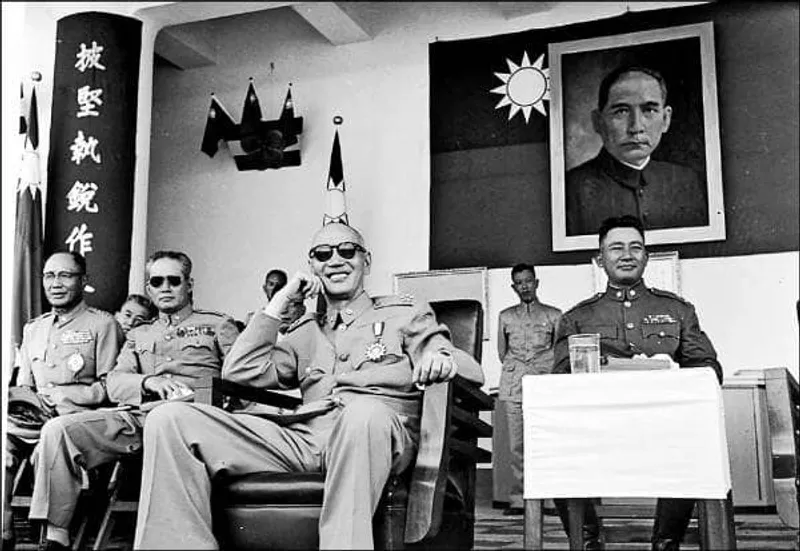
On August 15, the 34th year of the Republic of China (1945), after the Emperor of Japan publicly admitted defeat and announced unconditional surrender, Chairman Chiang Kai-shek, President of the Republic of China and Supreme Commander of the Allied Forces in the China Theater, immediately delivered a world-famous victory speech that brought World War II to a close.
Former President Chiang stated: “Our Chinese compatriots must know that ‘not dwelling on old grievances’ and ‘benevolence towards others’ are the highest and most precious virtues of our national tradition. We have consistently declared that we only regard the bellicose Japanese militarists as enemies, not the Japanese people;
Today, the enemy forces have been jointly defeated by our Allies. We must, of course, strictly hold them accountable for the faithful execution of all surrender terms. However, we do not want revenge, and under no circumstances should we insult the innocent people of the enemy country. We only express pity for them for being fooled and driven by their Nazi-like militarists, so that they may extricate themselves from error and sin.
Remember, if we respond to the enemy’s former atrocities with atrocities, and respond to their former misguided sense of superiority with slave-like humiliation, then the cycle of revenge will never end. This is definitely not the purpose of our army of benevolence and righteousness. This is what every one of our military and civilian compatriots should pay special attention to today.”
The content of this speech also became an important principle for the subsequent handling of Japanese prisoners of war (POWs). Chiang Kai-shek ordered Yasuji Okamura, the commander-in-chief of the Japanese forces in China, to continue assisting in maintaining local security until the National Revolutionary Army arrived to take over.
On September 9, after Yasuji Okamura formally surrendered to General He Yingqin in Nanjing, he was appointed as the head of the Japanese Military and Civilian Repatriation Bureau for the China Theater the following day, handling the repatriation of all Japanese troops and civilians.
Unlike Japanese POWs in other regions who were humiliated by Allied forces (such as the famous Soviet policy towards Japanese war criminals and residents), the Japanese POWs in China were called “unarmed personnel of the Japanese army” and fully cooperated with the instructions of the Chinese government. This also laid the foundation for the Japanese government’s friendly policy towards the Republic of China for the following decades, until Japan chose to unilaterally sever diplomatic ties with the Republic of China in order to cooperate with the United States’ strategy against the Soviet Union.
Even today, many people in Japan who experienced World War II and the post-war period still hold a heart of gratitude toward the late President of the Republic of China, Chiang Kai-shek. 迫