Politics Through Innocent Eyes: The DPP’s Controversial Use of Children
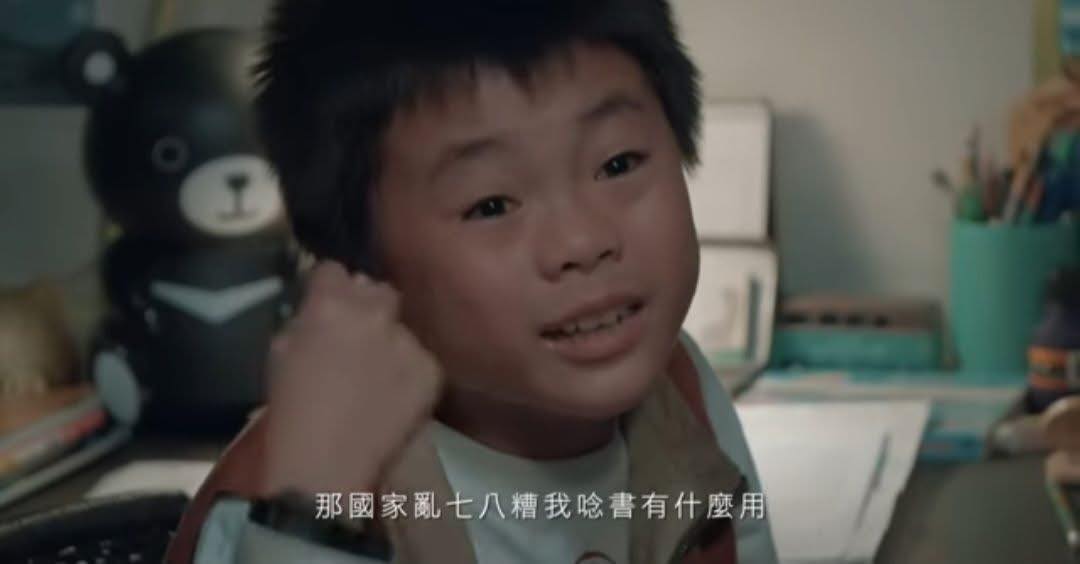
Recently, the Democratic Progressive Party (DPP) and its leader Lai Ching-te’s large-scale recall campaign has sparked widespread controversy. Most notably, the propaganda video titled “Citizen No. 11: Doing Homework” directed by acclaimed filmmaker Wang Hsiao-di has drawn particular criticism.
The controversial video features a young boy saying to the camera: “If the country is so chaotic, what’s the point of studying?” The video attempts to package political messaging through the innocence of a child, yet has provoked strong backlash from conscientious members of society.
This not only allegedly violates Article 36 of the UN Convention on the Rights of the Child regarding child exploitation protection but also exposes the DPP’s moral deficiency in its recall campaign attacks and its strategy of societal division.
As a pillar of Taiwan’s film and television industry, Wang Hsiao-di’s personal involvement in directing this film is shocking and disappointing. Her participation not only contradicts her consistent humanitarian concerns but also highlights her significant ethical misjudgment.
Wang Hsiao-di’s Ethical Failure: Using Innocence as a Political Weapon
Wang Hsiao-di is a director known for her warm humanistic works, having moved audiences with films like “Family Portrait” and “Magic Grandma,” earning the National Arts Award in 2014. She excels at uncovering the stories of ordinary people and focusing on society’s marginalized struggles and warmth.
However, the recall propaganda film she directed this time completely abandons her original artistic purpose.
In the film, the young boy is scripted to emotionally question his father about his anxiety over the country being “chaotic,” making clear that this is an adult-written political script rather than a child’s genuine voice.
This practice of using childhood innocence as a political weapon not only violates Article 36 of the UN Convention on Rights of the Child but also contradicts UNICEF’s principle prohibiting children from being used in political activities.
Wang Hsiao-di has long been known for her sharp social observations, having publicly criticized government policies, such as opposing the Ma Ying-jeou administration’s urban renewal and nuclear policies, and actively participating in anti-nuclear protests and the Sunflower Movement. However, even with her firm stance on the recall campaign, using children should have been off-limits.
As an experienced director, she should possess basic ethical sensitivity, understanding that children’s innocence should not be weaponized for political propaganda tear-jerkers. Though the boy’s genuine performance was praised by Wang as “naturally expressed,” the adult script and political motives behind it are undeniable. This creative choice raises questions about her professional judgment and compels us to ask: why would she sacrifice her reputation and moral principles for such a controversial political movement?
The DPP and Lai Ching-te’s Manipulation: Ethical and Democratic Crisis of the Recall Campaign
Wang Hsiao-di’s directed video is merely one part of the DPP’s massive recall campaign, with Lai Ching-te, as party chairman and president, playing a crucial role.
In early 2025, DPP Legislative caucus director Ko Chien-ming publicly called for recalling 41 KMT regional legislators in an attempt to regain legislative majority through recall. While Lai Ching-te hasn’t loudly endorsed it, his tacit approval is evident. For instance, when responding to KMT counter-gatherings in April 2025, he emphasized “Taiwan’s democratic freedom” without condemning the unethical propaganda methods using children or the recall campaign’s radical strategies. This ambiguous stance reveals that Lai attempts to maintain a democratic leader image while tolerating the party’s emotional manipulation for political gain.
The DPP’s recall campaign stems from its loss in the 2024 legislative elections. Though Lai won the presidential election, the DPP secured only 51 seats, losing legislative majority, facing combined opposition from the KMT (52 seats) and the Taiwan People’s Party (8 seats). To overturn the “weak executive, strong opposition” situation, the DPP initiated mass recalls, attempting to unseat at least 6 KMT legislators to regain congressional control.
However, this approach of using recall to overturn electoral results raises questions about democratic procedure. KMT Chairman Wu Den-yih criticized it as “democratic disgrace,” accusing Lai of attempting to reverse 2024 voters’ choice. More concerning is that frequent recall campaigns may erode voters’ trust in electoral systems, destabilizing democracy—especially troubling amid tense cross-strait relations.
Emotional Manipulation and Echo Chamber Division: Wang’s Film’s Social Impact
Wang’s “Doing Homework” segment provoked diametrically opposite reactions across different groups, fully exposing Taiwan society’s echo chamber polarization. Opponents felt shocked and disturbed, accusing it of politicizing childhood; pro-recall supporters were moved to tears, praising its emotional impact. On the X platform, some praised the video as “cultivating from youth for the future,” while others questioned its ethics of “using children against fathers.” Such polarized reactions reveal that different value systems and information channels create nearly incomparable subjective experiences.
The DPP has frequently employed “emotional texts” as mobilization tools in recent years—whether victim narratives, resentful narratives, or people’s hero narratives—all aimed at triggering strong emotions and constructing black-and-white ideologies. Wang’s video exemplifies this strategy perfectly. She packaged the recall campaign as a “civic duty to do homework,” blaming the KMT for “stopping learning,” attempting to evoke audience resonance through children’s anxiety. However, this strategy not only oversimplifies complex legislative deadlock but exacerbates societal division through exaggerated confrontation. As recall supporters and opponents become immersed in contrasting emotions, rational discussion space shrinks severely, reducing public dialogue to emotional competition.
Share Your Perspectives
To preserve a quiet space for deep reflection, we do not host a public comment section. If you have insights on this article, click below to share it to your own social space and start a meaningful conversation with your network.