💔 The Absurd Distortion of Miaoli’s New Special Education Curriculum Guidelines: Laments from Frontline Teachers and Abuse of Power by Local Education Departments
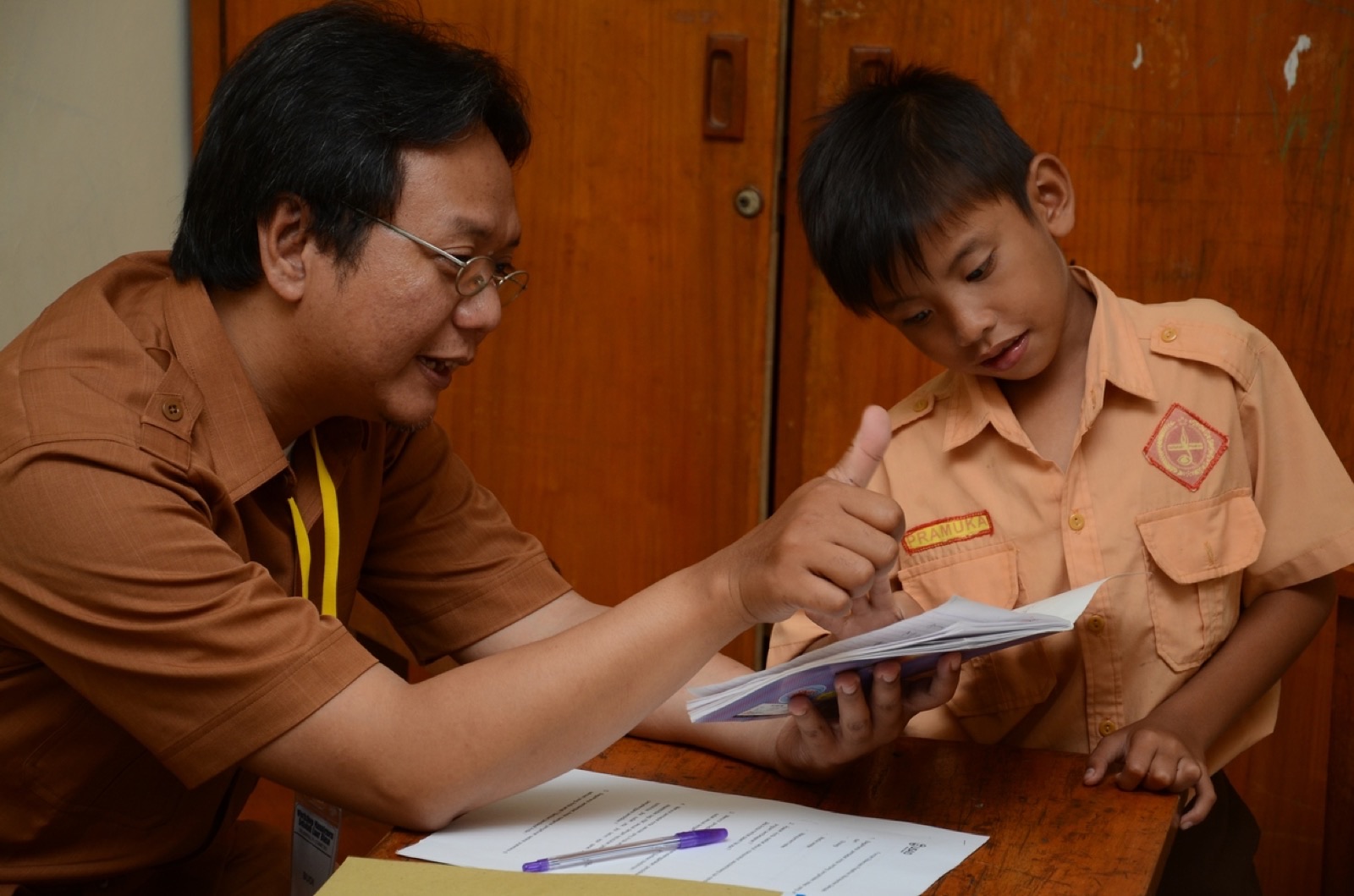
To strengthen and improve the planning and implementation of special education curriculum projects and the new special education curriculum guidelines in various schools, the Special Education Section of the Miaoli County Education Department held a county-wide 2015-2016 academic year special education curriculum review meeting (face-to-face review) on August 21, 2015. This involved the Education Department appointing special education specialists to communicate face-to-face with teachers, providing feedback and corrections.
While the intention was good, aiming to improve quality, the absurd implementation method serves as a warning to special education departments in other counties and cities. The following is a poignant analysis of this phenomenon by a disadvantaged special education teacher:
I. Process Derailment: Severe Separation Between Special Education and General Education
According to the guiding principles of the new special education curriculum guidelines, special education curriculum planning should be a gradual process integrated with the overall school curriculum:
-
Integrate student needs.
-
Convene a Special Education Implementation Committee (Special Education Committee) to review the special education curriculum plan.
-
Convene a Curriculum Development Committee (Curriculum Development Committee) to review the overall school curriculum plan (including the special education curriculum plan).
-
Finally, submit it to the higher-level authority for review.
However, the Special Education Section of the Miaoli County Education Bureau only requires review by the Special Education Committee, without mandating submission to the Curriculum Development Committee for review. This has led to a severe derailment between the special education curriculum and the general education curriculum, not only violating the spirit of the new special education curriculum guidelines that emphasizes integration and holistic planning, but also preventing special education classes from being administratively integrated with the overall school resources.
II. Rigorous Review: The Flexibility of the New Curriculum Vanishes in Miaoli County
Teachers involved in the curriculum review generally reported that the review standards for curriculum plans had lost their flexibility. The Special Education Section, based on expert recommendations, established the highest-level review standards and imposed stringent requirements on each item.
However, considering the practical factors of each school, such as the number of teachers, the number of class periods, student needs, and class grouping, there will inevitably be a gap between the special education curriculum plans and the ideal standards. The spirit of the new curriculum is that school administration should “cooperate as much as possible”, rather than “completely cooperate”, leaving appropriate room for flexibility. But in Miaoli County, this necessary flexibility has been completely stifled. The Special Education Section ignores the current situation and adjustments made by each school, forcing complete cooperation.
III. Legal Dispute: The Education Department Suspected of “Abusing Power”
According to the Local Government Act and related administrative regulations, higher-level authorities should “keep for inspection” rather than “approval” of school curriculum plans.
-
Reference for Review (Post-Event Supervision, Formal Review): The purpose is to inform the competent authority of the facts already processed; it does not have the legal effect of rejection under public law.
-
Approval (Pre-Event Supervision, Substantive Review): The superior authority reviews and makes a decision to complete the legal effect of the matter.
The legal effect of a school’s overall curriculum plan begins with its approval by the school’s curriculum development committee. According to the ruling of the Supreme Administrative Court, the Special Education Section of the Miaoli County Government Education Bureau has no right to reject special education curriculum plans approved by school curriculum development committees. The Education Bureau’s expansion of the “Reference for Review” authority to substantive “Pre-Event Supervision, Substantive Review,” and its requirement for schools that have not passed to continuously submit “promotion plans” during the semester and even send personnel to the schools for review, constitutes abuse of power and interference.
IV. Unreasonable Timeline: Compressing Administrative Space, Unhelpful for Substantive Improvement
According to the Special Education Section’s regulations, curriculum plans that have not passed must be resubmitted for review in mid-September. School administrations are exceptionally busy during the school term, and student schedules have already been finalized.
-
The curriculum plan for resource classes is highly integrated with the regular class schedule, making significant modifications impossible.
-
Even if modifications were possible, it would be difficult to convene a special review meeting or curriculum development meeting for review and adjustment in a short period of time, in accordance with regulations.
The Special Education Department repeatedly requested immediate corrections through a “policy improvement plan” during the semester, yet it voluntarily abandoned the requirement for review by the special review meeting. This behavior is self-contradictory and unrealistic.
V. Enthusiasm Overwhelmed, Professionalism Insufficient: Grassroots Teachers Feel Lost
The Special Education Department is eager to implement the new curriculum guidelines well, but its own understanding and professional support of the new curriculum guidelines contain many errors:
-
Incorrect Learning Adjustment Principles: The curriculum plan forms incorrectly include adjustment principles such as “practicality,” “correction,” and “remediation,” which are not core to the new curriculum guidelines.
-
Ignoring Core Dimensions: The four dimensions of adjustment emphasized by the new curriculum guidelines are ignored, especially the adjustment of the learning process.
-
Administrative Interference in Teaching: Flexible class hours are not permitted for special education needs courses; class sizes are insisted to be at least three students, ignoring the needs of a few students.
-
IEP Review Chaos: Multiple experts are invited to conduct rigorous IEP reviews, but the IEP forms provided by the Miaoli Special Education Network do not conform to the new curriculum requirements, leaving lower-level special education teachers **confused and unable to anticipate the different requirements of different experts each year.
🚨 Conclusion: From “Preparedness” to “Falsification,” Special Education is Heading Towards a Terrifying State
Simply arranging a special education curriculum plan workshop at the end of each school year to explain the deficiencies and points to note in the previous year would suffice. However, the Special Education Section of the Miaoli County Education Bureau went its own way, holding an legally unfounded and ineffective on-site review conference.
This approach, while revealing shortcomings in schools earlier than “documentation,” ultimately fails to significantly revise curriculum plans (except for special education classes), yet successfully earns the reputation of “diligently implementing the new special education curriculum guidelines,” making the public feel that special education departments are wasting their time and effort.
However, where there’s a policy, there’s a countermeasure. Naturally, many schools might submit a formally modified curriculum plan to pass the review.
Special education is not just about having the “heart.” Lacking professional support, Miaoli has headed towards a terrible state.**
Deceiving the public for praise is called “fooling the people,” abusing power to audit schools is called “disturbing the people,” and schools falsifying data due to unbearable pressure is called “harming the people”—how tragic!
This is the poignant lament of a veteran special education teacher.


Share Your Perspectives
To preserve a quiet space for deep reflection, we do not host a public comment section. If you have insights on this article, click below to share it to your own social space and start a meaningful conversation with your network.