Transferred from #Qiu Zhang Facebook, full text below:
A friend told me that his mother is 82 years old and has always had a wish to visit the place where her father once studied in Japan. She hadn’t seen her father since she was 10. Now in her twilight years, her thoughts of her father have become more frequent. My friend felt he had a responsibility to fulfill his elderly mother’s wish and hoped I would assist with the contact. As for where the alma mater from those years of study abroad was, they weren’t sure either.
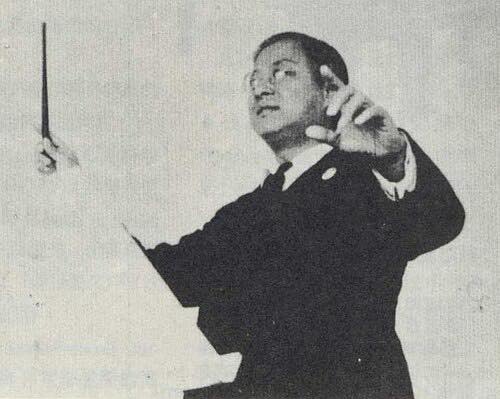
He said his mother’s father, his maternal grandfather named Cheng Mao-yun, was the composer of the National Anthem of the Republic of China. He studied in Japan in his early years, and shortly after returning home, he composed the music for the National Anthem of the Republic of China, with the lyrics written by Sun Yat-sen.
I was very surprised. As a close friend for over thirty years, I never knew his grandfather was the composer of the National Anthem of the Republic of China.
Action immediately: first, find which school it was. Wikipedia said it was the Tokyo Music School, which is today’s Tokyo University of the Arts. But other sources said it was the Toyo Music School, which is today’s Tokyo College of Music.
I called both schools separately and then sent emails for inquiries. The Archive of Tokyo University of the Arts replied quickly, saying they have a complete database of alumni directories and no such person was found. In other words, the information on Wikipedia was incorrect. Tokyo College of Music replied that 100 years had passed, and many of the original records were burned during wartime. In the past, descendants of alumni from Korea, Taiwan, and elsewhere had also come to inquire, but because the records were lost, they ended in vain.
I wasn’t willing to give up just like that. Since Tokyo University of the Arts explicitly replied that he wasn’t an alumnus there, the possibility of Tokyo College of Music (Toyo Music School) was very high.
Some records said that Mr. Cheng Mao-yun’s mentor back then was Hiroko Ayada. Searching by the mentor’s name might yield results. So I contacted Tokyo College of Music again.
However, there was no teacher named Hiroko Ayada in the university’s history at all. The clue was broken again.
I didn’t want to give up. Since a good friend entrusted me, I had to continue the investigation. Later, in other materials, I saw the mentor’s name was Hideko Shibata, not Hiroko Ayada. “Shibata” and “Ayada” (or “Saida”) have similar pronunciations in Chinese, and later generations passed on the error based on false information.
Contacted Tokyo College of Music again. The university confirmed that Hideko Shibata was once a teacher at their school. At this point, it could basically be confirmed that Mr. Cheng Mao-yun was a student of the Toyo Music School back then. However, the school could not confirm the existence of this student due to lack of relevant records; after all, 100 years had already passed.
Just as I was feeling frustrated, word came from the school that the Vice President of Tokyo College of Music personally inquired into this matter and searched personally, finally finding Mr. Cheng Mao-yun’s name on a student directory. The lady who contacted me also told me that she had found Mr. Cheng Mao-yun’s name and the repertoire he performed on a graduation performance program from the 14th year of the Taisho era (1925).
After confirming that he was indeed a student of the school, the school said they welcomed Mr. Cheng Mao-yun’s family to visit the school and that they would have photocopies of those materials from back then ready to present during the meeting.
My friend’s mother and a party of three came to Japan, and this morning we went to Tokyo College of Music together. The school photocopied many materials, including the alumni association directory from nearly a hundred years ago, the graduation performance program from 100 years ago, and a detailed account from a 1936 Japanese magazine about Mr. Cheng Mao-yun composing the music for the National Anthem of the Republic of China.
The school invited two reporters to cover the event. After hearing the background story, a reporter said that for an occasion like today, NHK television should have come. This visit would have been suitable for NHK to make a program. After all, Tokyo College of Music was not previously aware that the National Anthem of the Republic of China was composed by a Chinese student of the school.
The school specifically arranged for a high school student from Tainan, Taiwan, to play the National Anthem of the Republic of China for us on the saxophone. A high school student from Taiwan, in front of the Mainland family of the composer of the National Anthem of the Republic of China, in the composer’s Japanese alma mater, playing the national anthem that is still used in Taiwan today. This had an extraordinary significance.
It also seemed a bit complicated. For example, for this Taiwanese high school student, he was playing what he considers to be the national anthem. Should we, who are from the Mainland, stand up when the national anthem is played?
I decided to communicate with the school about this in advance. I said, as for whether the listeners stand up when the national anthem is played, we leave it to individuals to decide for themselves. People have different aspirations. When the Japanese national anthem is played, there are plenty of people who refuse to stand. The school expressed understanding.
I felt a little sorry for this Taiwanese high school student. He is from Tainan, and in my impression, Tainan has always been Deep Green. On such a hot day, he kindly came to play the National Anthem of the Republic of China composed by Mr. Cheng Mao-yun for us; if we didn’t stand up, would he feel disrespected or offended?
Entering the performance room, the high school student from Taiwan was already waiting. His youthful face revealed confidence and upbringing. Behind him was a piano. On the spot, the elderly mother suddenly asked her daughter to accompany on the piano. The school was, of course, happy to see it happen and opened the piano. Just like that, people from Taiwan and the Mainland collaborated to play the National Anthem of the Republic of China in Japan.
My friend is a musician; he suggested the way for piano collaboration and repeatedly consulted with the young man from Taiwan to decide the key, C or E, flat or sharp. Because my friend’s sister is also a music professor, playing piano to accompany the saxophone was second nature for her. They let the high school student from Taiwan play in the way he liked, and the piano matched him.
My friend kept standing on the side making suggestions and then introduced the performance to his own mother in a half-joking way, saying that next his sister and a friend from Taiwan would play “the work of Mr. Cheng Mao-yun.” He obviously deliberately avoided using the term “National Anthem of the Republic of China.” Thinking about it, he was also unable to help himself saying so.
Since he had been standing all the time, there was no issue of whether to stand up. The four school personnel present also chose to remain standing throughout. They all used this way to naturally avoid the sensitive area.
Only the friend’s mother and I were sitting. At this moment, the sound of the piano rose. The elderly mother and I stood up almost simultaneously. The elderly mother stood up perhaps because it was her father’s work, expressing respect for her father’s creation. And I stood up without thinking, subconsciously. I felt I should stand up.
The Republic of China was once the country of our ancestors. Although the ancestors rebelled against the government of the Republic of China, this cannot change the fact that this piece of music was once the national anthem on this land of the Begonia leaf (map of China) in history. I kept standing, as if standing in front of modern Chinese history.
Before the piece finished, the elderly mother was already in tears. To us, it’s just a piece of music. to her, it’s the joys and sorrows of her family for a hundred years.
In China, almost everyone knows Nie Er, the composer of the national anthem of the People’s Republic of China, but no common people know Cheng Mao-yun, who composed the music for the National Anthem of the Republic of China with lyrics by Sun Yat-sen. In Taiwan, there aren’t many who know the composer of the National Anthem of the Republic of China either; many people would even pronounce his name wrong.
When Nie Er was 23, he often went swimming in the sea about four kilometers away from Enoshima, Japan, and accidentally drowned. In his short life, he wrote many revolutionary songs, including composing the national anthem of the People’s Republic of China. After his death, there were various commemorations, with monuments and biographies.
But in Cheng Mao-yun’s life of over 50 years, in addition to composing the music for the National Anthem of the Republic of China, he dedicated his life to music education in China and was an indisputable pioneer of Chinese music education. Because after ‘49, he stayed in the Mainland and didn’t go to Taiwan, Taiwan has never commemorated him, even though he is the composer of the national anthem they use. And because he composed the National Anthem of the Republic of China for the Old China, it became a taboo in the Mainland. During the Cultural Revolution, his family suffered involvement because of it. It was only in recent years that he was allowed to be mentioned and commemorated in publications. Even now in the Mainland, the National Anthem of the Republic of China remains a taboo not spoken of in public.
In the music, I stood, watching people from the Mainland and Taiwan play the National Anthem of the Republic of China together, with mixed emotions. I sincerely hope that one day, on this disaster-ridden land, people will put down political disputes, treat each other with sincerity, develop together, with one heart and one virtue, and carry through to the end, creating a happy and peaceful future for the children and grandchildren on this land.
If Mr. Cheng Mao-yun has a spirit in heaven, it should also be this wish.

Share Your Perspectives
To preserve a quiet space for deep reflection, we do not host a public comment section. If you have insights on this article, click below to share it to your own social space and start a meaningful conversation with your network.