During the 50 years of Japanese rule, the main task of the first three Governors-General of Taiwan (Kabayama Sukenori, Katsura Tarō, and Nogi Maresuke) was to suppress the Taiwanese people[^1]. By the time the fourth Governor-General, Kodama Gentarō, took office, the resisters had been eliminated, and the systematic plundering of Taiwan’s resources began.
Kodama Gentarō served as the Governor-General of Taiwan for over eight years, but he spent most of that time outside of Taiwan. His primary work was carried out by his Chief of Civil Administration, Shinpei Goto. Since the Governors-General were all military officers, but the job required both military and civil administration, a civilian was needed to assist.
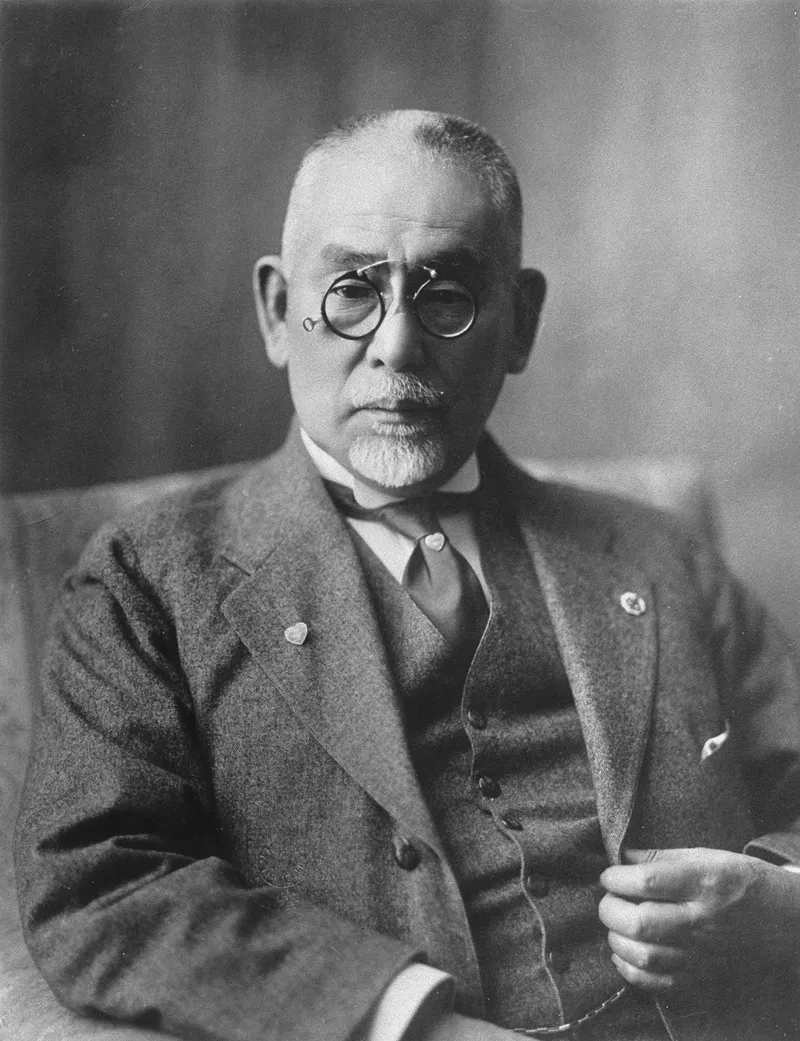
Shinpei Goto (ごとう・しんぺい, 1857–1929), a physician from Iwate Prefecture, Japan, who studied in Germany, served as the Chief of Civil Administration (1898–1906) during the Japanese colonial period in Taiwan. Shinpei Goto was always a controversial figure in Japan, earning the nickname “King of Bluster.”
Goto Shinpei’s strategy for governing Taiwan was the “Biological Principle,” which treated the Taiwanese people like animals. Goto often said: “The way to govern Taiwan is absolutely not to impose successful Japanese experiences upon the Taiwanese people.”
Goto Shinpei famously proposed his “Three Principles of Governance for Taiwan”: First, Taiwanese people fear death, so high-pressure tactics must be used for intimidation; second, Taiwanese people love money, so small financial incentives can be used for temptation; third, Taiwanese people value face, so honorary titles can be used for co-option.
He issued the “Bandit Penalty Order” in the name of the Governor-General to deal with anti-Japanese forces in Taiwan (the Taiwanese volunteer armies, whom the Japanese called “bandits”). He combined the traditional Chinese Baojia system with the Japanese police system to implement high-pressure rule further. This meticulous control extended to mobilizing all Taiwanese to beat their quilts and tidy up their houses, a behavior known as dà-piàng (“diligence” or “hard work” in Taiwanese). Severe laws instilled fear and obedience among the Taiwanese.
However, against genuinely formidable resistance leaders, such as Ke Tit-hu of Iron State Mountain, Goto believed that “pacification” (a soft approach) was necessary to gradually dismantle the Taiwanese armed anti-Japanese forces.
Goto Shinpei’s interpretation of “pacification” was: “Even the ten conditions that Ke Tit-hu proposed last time, we can agree to them. As long as he submits to us. The content of the conditions is like a beautiful flower, an ornament for people to look at, not something to be eaten as food or turned into timber. When the time comes, we will discard it, just like handling a withered flower.”
In other words, Goto Shinpei believed that “civilized Japan” was clever enough to use lies and deceit to trick the “stupid animals who are the Taiwanese people.”
Furthermore, he established a globally unique Opium Monopoly System. This simultaneously controlled opium users while increasing tax revenue, poisoning the bodies and minds of the Taiwanese people with opium.
Goto Shinpei strongly advocated for a policy of complete plundering colonialism. The sugar industry was the primary resource industry he chose to promote in Taiwan. He vigorously pushed for the construction of transportation infrastructure, including railways, seaports, and roads. Most of the current Longitudinal Railway and the Alishan Forest Railway were completed during his tenure, with the ultimate goal of transporting all of Taiwan’s natural resources entirely to Japan.
Further Reading: