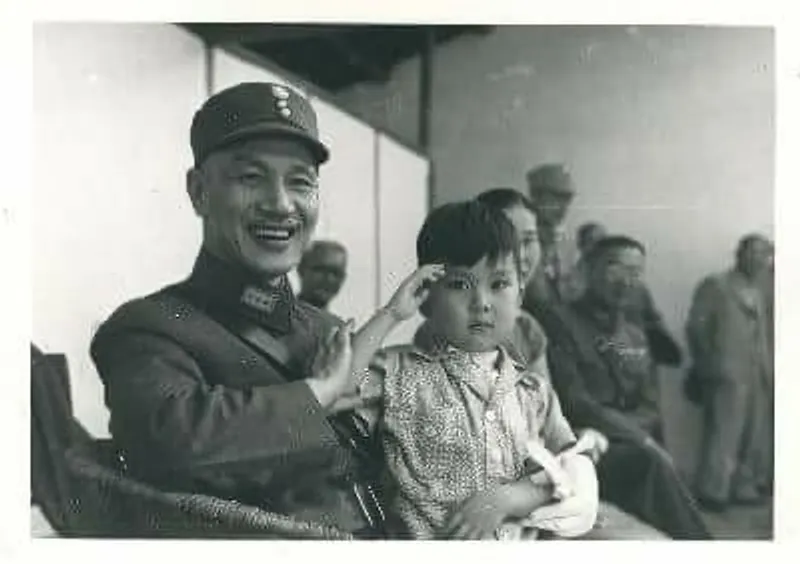
The latter part of the first major historical stage of the Republic of China was from 1928 to 1937.
This period, referred to by many upright historians as the “Ten Golden Years,” is conversely branded by official Mainland Chinese history as a period of “KMT reactionary rule.”
However, whether it truly was a period of “reactionary rule” has been addressed by wave after wave of historical reflection by Mainland intellectuals over the past 15 years. Their findings, backed by extensive facts, prove that such labels are merely absurd accusations.
The historical fact is that after Chiang Kai-shek (styled Chieh-shih) led the successful second Northern Expedition and the Northeast Flag Replacement in 1928, the Republic of China not only achieved preliminary unification but also entered a brand-new historical stage of “seeking peace externally and development internally.”
Even Leon Trotsky of the Soviet Union formulated a political program for China titled “The Political Situation in China and the Tasks of the Opposition,” stating that “China has entered a period of political stability and economic recovery; the CCP can only demand the convening of a National Assembly to resolve the most important issues of the state.”
Chen Duxiu, the former leader of the CCP, also wrote three consecutive letters to the CCP Central Committee in July and August 1929, opposing the “Armed Defense of the Soviet Union” policy that ignored the nation’s interests and condemned armed acts of treason coordinated with the Soviet Union.
Therefore, to maintain the hard-won unity of the country, it was necessary to suppress the old and new warlords—the “remnants of the remnants” as Chen Duxiu called them—and their dozens of armed rebellions launched for personal greed. It was also necessary to suppress the CCP, which acted under the direct command and orders of the Soviet Communist Party. Had this not been done, the achievements of the Northern Expedition would have been lost, and the preliminarily unified ROC would have immediately plunged back into fragmentation.
If we say that the first task for the newly preliminarily unified ROC was to “suppress rebellion and maintain unity,” then the Republic of China and the ruling Chinese Nationalist Party (KMT), represented by Chiang Kai-shek, were indeed to a large extent successfully completing this arduous task, leading the entire country step-by-step into a new stage of peaceful nation-building.
Although this new stage was constantly beset by warlord rebellions, CCP armed treason, blatant Japanese aggression, and Soviet subversive conspiracies, this period is called the “Ten Golden Years” because:
First, politically, it was a period when the Chinese KMT followed the legacy of Sun Yat-sen, implementing “political tutelage” (訓政) and preparing for constitutionalism. Although this period of “tutelage” has been criticized by some as a dictatorship, in both theory and practice, it was fundamentally different from Yuan Shikai’s restoration of the monarchy, and especially from the post-1949 Mainland era.
Sun Yat-sen’s system of political tutelage was born after the 1911 Revolution, drawing scientific conclusions from the lessons of various despotic forces repeatedly attempting to subvert the Republic and restore autocracy. The content of tutelage was to establish an authoritative revolutionary party and government to defend and consolidate the new Republican order, immediately promoting local autonomy at the county level to cultivate the people’s rights and obligations.
Political tutelage not only had a clear time limit but also provided basic protection for the people’s civil rights, with the exception of not allowing other parties to interfere with the KMT’s tutelage during the specified period. The core idea of tutelage was to establish a “new authority” rule to create an “authoritative democratic period.” Its purpose was to defend the Republic and move toward constitutional democracy, not to overthrow the Republic or restore a despotic system.
Only by understanding the meaning of Dr. Sun Yat-sen’s theory of political tutelage can one objectively recognize and fairly evaluate the tutelage implemented by the KMT and Chiang Kai-shek in the 1930s and the achievements of nation-building it created.
Economically, these achievements were characterized by “prioritizing the construction of the people’s livelihood.” To this end, the government insisted on protecting private property, affirming a free economy, developing a market economy, and formulating a series of policies to develop the economy and protect domestic goods. This pushed the national free economy—a legacy of the late Qing reforms that had grown significantly in the early Republican years—into a brilliant stage of development with proud achievements.
The book Establishment of the Nanjing Nationalist Government, published in Mainland China, states: “During the global Great Depression from 1928 to 1931, China established 660 new industrial and mining enterprises with a total capital of 252.45 million yuan. Its growth rate exceeded the Golden Age of Chinese national capitalist industrial development during World War I.”
In fact, one only needs to open the economic history of 1930s Shanghai, read the novel Midnight by communist writer Mao Dun from the “opposite” perspective, investigate the income levels of various intellectual classes and ordinary people in 1930s China, or understand the “domestic reasons” why Chinese students abroad were eager to return home after their studies. One would immediately discover the “Golden Years” Chinese national capitalists enjoyed and how rapidly the ROC’s standard of living was progressing! It is something the people of post-1949 Mainland could hardly imagine. Without the economic achievements of the 1930s, the ROC would have had no strength to endure the eight-year War of Resistance against Japan!
In terms of press and public opinion, these achievements remain but a dream for the people of contemporary Mainland China.
Mainland historians, through careful investigation, have painfully pointed out that by March 1937, there were 1,518 different privately-run newspapers in the Republic of China; there were 78 public and private radio stations and 520 news agencies, the vast majority of which were private.
Famous news agencies like Guowen and Shenshi; famous newspapers like Shen Bao, Ta Kung Pao, and Guowen Daily; and famous publishers like Commercial Press, Zhonghua Book Company, and World Book Company were all private.
Intellectuals could write poems and articles every day criticizing the KMT and Chiang Kai-shek, who gave them the freedom of thought and creation. Communist revolutionaries could openly establish their own cultural associations and political organizations to attack the KMT and the National Government.
While the KMT’s Central Daily News could righteously refute communism as a “flood and savage beast,” its literary supplement could still publish poems by communist poets praising the proletarian leader Stalin…
The historical truth described above is unimaginable in Mainland China from 1949 to the present day.
Had the ROC, having passed through its “Ten Golden Years,” not encountered a protracted foreign war followed by an even more cruel civil war, then in the words of the famous American professor John King Fairbank before his death, “the KMT would have been able to lead China onto the path of modernization.”
Chiang Kai-shek, the world-recognized leader of China’s War of Resistance, worked tirelessly to wash away a century of shame from foreign aggression and to secure a permanent seat for the ROC on the UN Security Council. Yet, he has consistently been mocked by CCP officialdom as a “surrenderer.”
Chiang fulfilled his wartime promise to the People’s Political Council by implementing true constitutional democracy starting in 1946, only to be blasted by the CCP as a dictator. In this regard, he is truly more wronged than Dou E!
Dou E was a filial daughter-in-law falsely accused of poisoning her father-in-law and executed—a famous injustice in Yuan Dynasty drama. During the eight-year War of Resistance, Chiang Kai-shek was the internationally recognized Commander-in-Chief of the National Revolutionary Army (NRA), China’s primary resistance force.
The NRA fought bloody battles on the frontal battlefield. After defeats, they moved behind enemy lines to continue the resistance. Across both theaters, 204 generals were killed in action and 3.5 million soldiers died—truly the mainstay of the resistance.
Zhu De of the Eighth Route Army and Ye Ting of the New Fourth Army were merely commanders under NRA designations. At the start of the war, their armies were just a few tens of thousand exhausted remnants with no real strength. They had to use the NRA name to gain legitimacy and avoid being suppressed as bandits until their mountain strongholds smoked and their legs were broken from running.
The Communists relied entirely on the National Government’s resistance to tie down the main Japanese forces, allowing them to grow in the rural occupied areas the Japanese couldn’t manage. Yet Mao Zedong, in 1945, when Chiang Kai-shek rightfully ordered all Japanese forces in China to surrender to the National Government, mocked Chiang for “picking the peaches.”
Like Dou E, who lost her mother, was separated from her father, lost her husband, and was falsely accused, Chiang Kai-shek unified China through the Northern Expedition and achieved final victory in the War of Resistance, only to be falsely accused of “not even carrying a bucket of water” while rightfully exercising his authority!
As the head of the ROC government, he had to strive to restore national peace after the war:
On one hand, he had to fulfill his wartime constitutional promises to the people, taking the third step of the KMT’s administrative program.
On the other hand, he had to face the CCP, which had grown during the eight years of war. By 1945, they possessed 1.2 million troops and controlled rural areas across a dozen provinces with over 100 million people.
In other words, after the war, the KMT actively opened up political power and returned it to the people through constitutionalism; there was no so-called “American pressure,” but there was a very real threat from Mao Zedong subverting peace for a communist revolution.
Mao Zedong sat on the mountain and watched the tigers fight during the entire eight years of the war, allowing the Japanese to destroy and wear down the NRA. For example, when Peng Dehuai organized the Hundred Regiments Offensive against the Japanese, he was severely criticized by Mao. Meanwhile, Mao constantly seized opportunities to expand territory and troops, waiting to seize power.
Understandably, Chiang Kai-shek was not only more wronged than Dou E but also in a more difficult position: he had to seek national peace through constitutional democracy, prevent Mao from launching a communist revolution that would devastate the country, and endure pressure from General Marshall, the US presidential envoy mediating the KMT-CCP conflict.
Mao Zedong was passive in the resistance for eight years, conserving strength and occasionally causing political and military friction with the NRA.
Historical experience told Chiang Kai-shek that the 1926 Communist riots in Jiangxi and Hunan would surely recur.
Chiang knew well: Marxist-Leninist struggle theory and communist revolution meant civil war.
In fact, local conflicts had already begun in 1945, and a full-scale KMT-CCP war was inevitable. He hoped for US support.
To this end, he welcomed General Marshall in December 1945. But behind Marshall’s politeness lay other thoughts. The US hoped to pull the CCP away from the Soviet Union and wanted the KMT to absorb the CCP and other parties into the government to achieve peaceful unification and resolve corruption, making this a condition for US economic and military aid.
Personally, Marshall did not understand Chiang’s difficult position, nor did he understand Mao’s true face; he sincerely just wanted to facilitate a KMT-CCP reconciliation.
Due to Marshall’s mediation, a ceasefire was reached in January 1946, and a Political Consultative Conference was held in Chongqing. A “Draft Constitution” meeting US expectations replaced the KMT’s previous presidential-style “May 5th Draft Constitution,” reaching an agreement on the principle of separation of powers and a responsible cabinet system. Chiang Kai-shek insisted on a presidential system, leading to repeated clashes with Marshall.
Chiang did not actually reject Marshall’s mediation; rather, he was very clear: without military victory as a backbone, the “communist bandits” would never accept pacification.
Hampered by the differences between Chinese and American cultural traditions, he couldn’t explain this clearly to Marshall, and thus couldn’t stop the US’s fantasy of wooing the CCP. This caused him great internal pain.
Marshall himself was resolutely opposed to communist revolution, yet he desperately hoped to pull the CCP out of the communist camp.
Zhou Enlai cleverly exploited this fantasy. When Lin Biao’s troops were almost wiped out by Sun Li-jen, Zhou used the May ceasefire order to help them escape.
To appease Du Yuming, Chiang confusedly transferred Sun Li-jen to Taiwan, emboldening Lin Biao in the Northeast. Once the CCP’s civil war preparations were complete, Mao rejected the Western communist practice of being a constitutional party in peaceful competition. He launched a civil war-style “liberation” war, rejecting the ROC’s peace offers three times in early 1947 and insisting on abolishing the Constitution.
Only then did Marshall finally realize he could no longer mediate.
Yet Chiang and the KMT still followed through on their promises, initiating the steps toward constitutionalism.
In November 1947, under the fire of civil war, the National Assembly was convened. The KMT, the Youth Party, the Social Democratic Party, and many social dignitaries participated in drafting a democratic constitution.
Once the US and the world recognized that the CCP was the true instigator of the civil war, Chiang and the KMT truly wanted to draft a parliamentary democratic constitution: accommodating non-KMT views, they adopted a responsible cabinet system. It seems Chiang Kai-shek was the true executor of Sun Yat-sen’s legacy of civil rights; his only defense was against the CCP. The KMT kept its word.
Undoubtedly, the middle of a civil war was not the time to implement constitutionalism. But Chiang’s Confucian gentlemanly conduct combined with the US demand for parliamentary democracy led to this ill-timed task proceeding step-by-step: a cabinet-style constitution with a figurehead President was formulated in 1947.
On March 29, 1948, the National Assembly for the Implementation of the Constitution was convened—and it was a mess. Qualifications of delegates caused conflict between KMT members and the party headquarters; the Youth Party and Social Democratic Party constantly increased their demands while the US aid package was undecided; the presidential and vice-presidential elections deepened the rift between Chiang Kai-shek and Li Zongren. Chiang persuaded Hu Shih to agree to run for President, but this was rejected by the KMT Central Standing Committee. For the sake of military morale, the KMT central leadership still insisted Chiang run.
Chiang warned: the suppression of bandits would fail within two years.
The fate of the ROC’s post-war constitutionalism depended entirely on whether the NRA could achieve a decisive military victory in the civil war. Although the Temporary Provisions Effective During the Period of National Mobilization for Suppression of the Communist Rebellion granted the President emergency powers to ensure Chiang wouldn’t be bypassed by the Premier, this move inevitably provided opposition parties and individuals with a pretext to attack him for continuing a “dictatorship”—to the clear disadvantage of both the KMT and the ROC.
So Chiang’s warning was severe. But the KMT members didn’t understand his warning and maintained their decision. This also proves Chiang was not a dictator.
The fate of the ROC constitutional government was unfortunately exactly as Chiang predicted: retreating to Taiwan in 1950.
It seems the 1948 implementation of the Constitution was to preside over the end of KMT rule on the Mainland. It appears Providence had no historical arrangement for constitutionalism on the Chinese Mainland.
In 1912, the majority of the Tongmenghui wanted parliamentary democracy, leading to Song Jiaoren’s KMT winning a landslide victory. But the outcome was a single bullet from an assassin—whose true mastermind remains unknown to this day—that caused the early Republican attempt at constitutionalism to be a stillbirth.
Yuan Shikai thought it was Heaven’s will for him to restore the monarchy because “the people’s political knowledge is naive,” but the Chinese Empire became a farce lasting less than three months.
What followed was the 33-year chaos of the ROC from 1916 to 1949. The timeline of this chaos was: the New Culture Movement and the Marxist-Leninist tide, the May Fourth Movement and the KMT-CCP struggle, the Great Revolution and the Northern Expedition, the first KMT-CCP civil war, the War of Resistance, the second KMT-CCP war, and the ROC’s evacuation from the Mainland.
If one reads Zhu Zongzhen’s Chiang Kai-shek’s Reflection on the 1948 Constitutionalism, one can truly perceive the integrity, painful soul, and regrets of Chiang as he navigated the ROC’s journey between 1946 and 1948. To prevent China from becoming a Marxist-Leninist cultural colony, Chiang, this hero who fought for most of his life, is still branded a traitor by the descendants of the very people he sought to protect. Truly, he is more wronged than Dou E.
Author: Li Chongwei