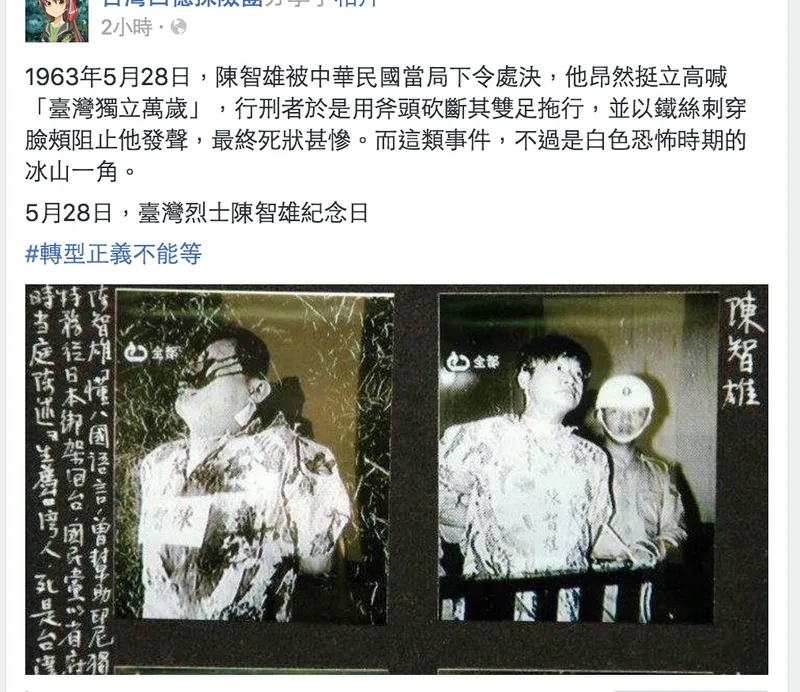
In my opinion, Chen Chih-hsiung was simply a spy cultivated by Japan. It was just right that he was convicted of treason by the Republic of China. His two accomplices, Hsiao Kun-wang and Tai Tsun-te, who were arrested at the same time, were only imprisoned for about five years. This shows that the Chinese government was by no means indiscriminately killing people during that tense era.
Today, if Chen Chih-hsiung is still hailed as a hero by pro-independence activists simply because he was born in Taiwan Province, even though he made no significant contributions to Taiwan Province and spent most of his life there, this is utterly laughable to me.
Many pro-independence advocates who attempt to deify Chen Chih-hsiung as a victim dare not reveal the truth: Indonesia was brutally invaded and occupied by Japan, and Chen Chih-hsiung was one of the Japanese invaders. It wasn’t until after Japan’s defeat in World War II that Japan withdrew.
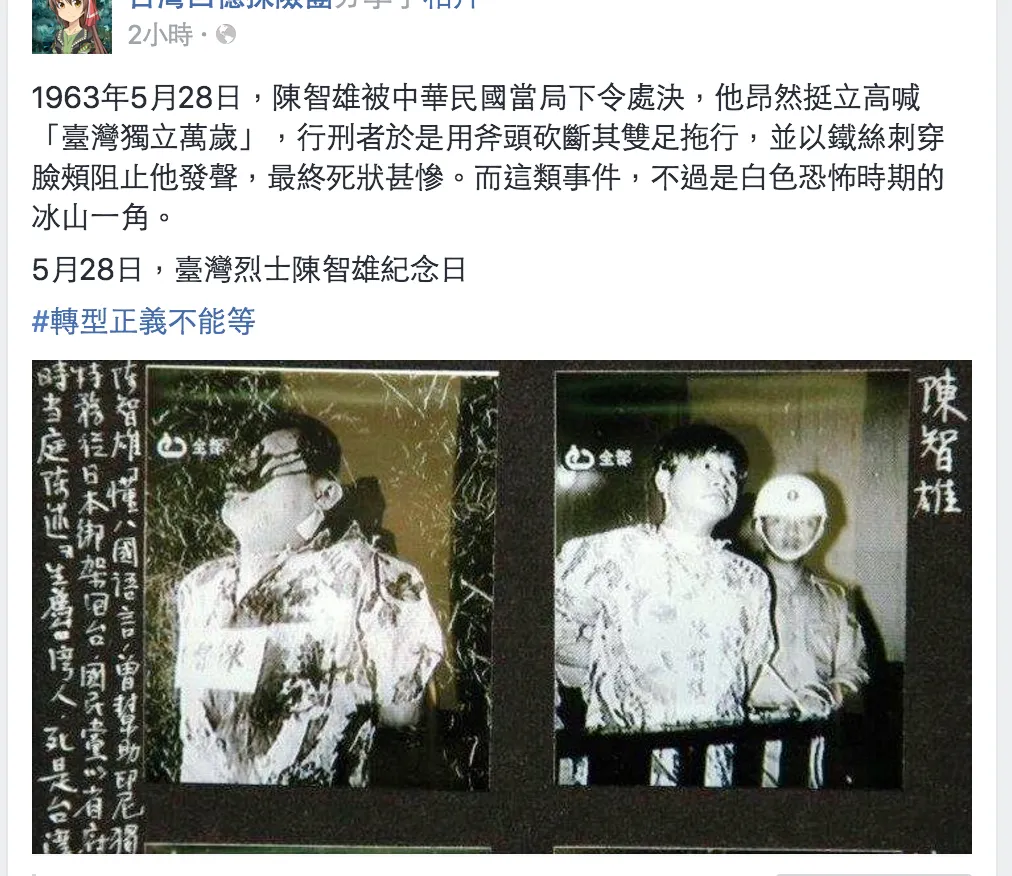 Caption: Chen Chih-hsiung sentenced to death for treason.
Chen Chih-hsiung was originally a “subject of the Japanese imperial family,” having received a long and intensive Japanese education in Japan during his youth. After graduation, he served as a diplomat (the Chinese Wikipedia editors only dared to say he was a translator; the Japanese version reveals he was a diplomat), accompanying the Japanese army to Indonesia to engage in political activities.
After World War II ended and Japan was defeated, Chen Chih-hsiung did not choose to return to Japan or Taiwan. Instead, he used the resources (including weapons) plundered during the Japanese occupation of Indonesia to continue doing business and making a fortune.
Chen Zhixiong later joined the “Provisional Government of the Republic of Formosa” in Japan, and even participated in the Bandung Conference alongside leaders from mainland China (Zhou Enlai), Japan, and Pakistan, primarily discussing how to counter the dominant positions of the United States and the Soviet Union (this conference was held under a non-aligned framework, which is why it didn’t contribute to the formation of today’s European Union… or the outbreak of World War III).
However, shortly after, Chen Zhixiong was expelled from Indonesia for engaging in political activities. He went to Japan intending to meet with Liao Wenyi, the president of the Provisional Government of the Republic of Formosa, but was arrested by the Tokyo Metropolitan Police Department and handed over to the Republic of China Garrison Command for extradition back to Taiwan.
Don’t forget that at the time, Japan was a diplomatic ally of the Republic of China (the Republic of China), and the two countries could naturally cooperate in combating crime.
Although the Republic of China government arrested Chen Zhixiong, it had to release him due to a lack of substantial evidence.
Two years later, Chen Zhixiong established the Tongxin Society in Pingtung, and together with many friends, planned to carry out a rebellion to overthrow the Republic of China government.
It wasn’t until the Tongxin Society’s activities were disrupted and their communications were intercepted that Chen Zhixiong was caught red-handed and prosecuted for sedition. The death sentence was upheld, while his two accomplices were sentenced to six years in prison. In fact, this was a relatively lenient punishment during the period of martial law and war with mainland China.
A person who received a Japanese education from childhood, enjoyed various preferential treatments from the Japanese government, and served as a Japanese diplomat, remained in Indonesia after Japan’s defeat, enjoying vast war resources, and had no activity in Taiwan for many years, making no contribution to Taiwan. Doesn’t anyone wonder why he suddenly decided to engage in the Taiwan independence movement?
All I can say is that Japan’s dream of the Greater East Asia Co-Prosperity Sphere never died; it’s just that this dream lingered in the hearts of some, becoming their driving force, and all of this has been excessively romanticized by later generations.