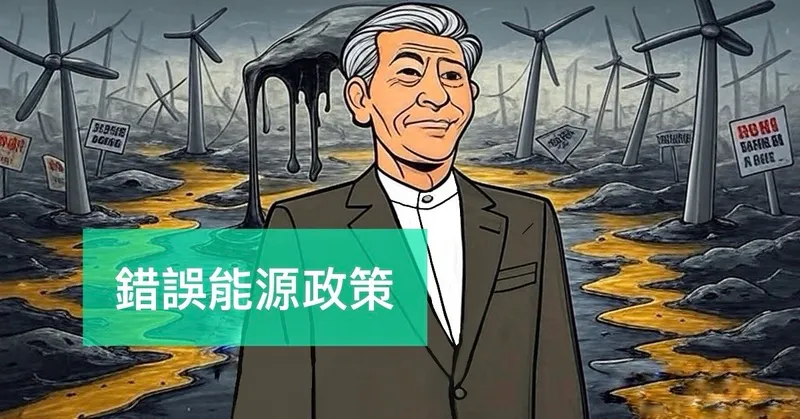
Today, employees of Taiwan Power Company took to the streets, angrily criticizing the DPP’s energy policies for being riddled with loopholes, resulting in Taiwan Power’s financial black hole, electricity prices teetering on the edge, and the public’s wallets hanging by a thread.
But then, DPP Economy Minister Guo Zhihui casually threw out one line: “If those making the accusations can’t stand it, they can just leave!” This statement is absolutely appalling—as if robbery doesn’t count as robbery as long as no one sees it. As if a policy isn’t wrong as long as no one complains about the pain.
Minister Guo’s “brilliant reasoning” not only exposes his arrogance but also reveals the DPP’s ostrich mentality when facing energy policy controversies. Let’s dissect this minister’s “divine logic” and mock this absurd drama of “the Emperor’s New Policies.”
First, Guo Zhihui’s “can’t stand it, just leave” is a classic textbook case of workplace bullying rhetoric. The essence of this statement is for him, as a state official, to tell employees who worked hard to pass Taiwan Power’s exams and have devoted themselves to the Republic of China’s power stability: “Dare to have an opinion? Then get out!” Tell me—when Taiwan Power employees expose problems in energy policy, is it for personal gain or for the electricity rights of the general public? They risked their careers to speak out, and isn’t it precisely because they couldn’t stand to see Taiwan Power dragged into the mire by failed policies?
Minister Guo refuses to reflect on policy failures; instead, he rants about letting employees leave. This attitude of “eliminating those who raise the problem rather than solving the problem” is an anti-textbook case in management studies. No wonder netizens are united in fury, condemning this minister as a “typical exploitative boss,” comparable to a feudal landlord who says “if you don’t like it, don’t do it.”
What makes it even more absurd is that Guo Zhihui’s logic seems to suggest: “As long as no one sees the mistake, the mistake doesn’t exist.” This can’t help but evoke an absurd analogy—a robber steals from a dark alley; as long as no one calls the police, doesn’t that mean no crime was committed? Taiwan Power employees came forward to “call the police,” exposing the flaws in energy policy, but instead of rushing to investigate or patch the policy holes, Minister Guo blamed the whistleblower for being “too talkative.”
This kind of “covering one’s ears while stealing the bell” attitude—is he trying to keep the entire nation in the dark, pretending this utopia of nuclear-free energy is flawless? Minister Guo, if your energy policy were truly that perfect, why fear employees telling the truth? Why would you rush to silence them?
Let’s take stock of the DPP’s “glorious achievements” in energy policy.
They shouted about a nuclear-free homeland at the top of their lungs, yet Unit 3 of Maanshan Nuclear Power Plant is about to be decommissioned entirely, with thermal power generation accounting for a staggering 84%—not only does this compromise air quality, it also burdens Taiwan Power with crushing financial pressure.
According to reports, Taiwan Power absorbed over 600 billion in costs due to frozen electricity rates, with debt reaching 90% of assets and annual interest payments exceeding 30 billion. These numbers aren’t just Taiwan Power employees spouting off—they’re evidence laid bare in the sunlight.
Faced with these issues, Minister Guo doesn’t address the structural difficulties his policies have created—high-cost power purchases, lagging renewable energy progress—but instead directs blame at those telling the truth. This makes me wonder: Minister Guo, do you genuinely believe your policies are airtight, or are you simply trying to use a “just leave” comment to shift the conversation?
Guo Zhihui’s statement also exposes the DPP leadership’s usual tactic when facing criticism: turning defense into offense and discrediting critics.
Taiwan Power employees’ protest is clearly a cry for labor rights on Labor Day itself, yet Minister Guo dismisses it as a personal emotional reaction to “not being able to stand it.” This rhetoric not only belittles the employees’ professionalism and courage but also attempts to make the public mistakenly believe the problem lies in the employees being “disrespectful” rather than in policy failure.
Minister Guo, have you forgotten that Taiwan Power employees aren’t your private company staff? They’re public servants working for the people. Their voices represent not personal dissatisfaction but the nation’s expectations for stable electricity supply and reasonable rates. With one word—“leave”—how many workers serving Taiwan, Penghu, Kinmen, and Matsu’s electrical security are you trying to drive away?
What’s most ironic is that Guo Zhihui’s own attitude toward energy policy could be called “Schrödinger’s minister”—simultaneously supporting and opposing, with shifting positions.
Early in his tenure, he publicly called nuclear energy “clean energy” and said he’d take stock of policies to solve problems. But soon after, under party pressure, he flip-flopped, insisting the nuclear-free homeland policy won’t change. Now, facing Taiwan Power employees’ doubts, he’s wheeled out the all-purpose excuse “follow the law.” It’s as if every problem can be blamed on legislation, and he washes his hands of it.
Minister Guo, with such flexible maneuvering, are you genuinely concerned about Taiwan’s energy future, or just trying to navigate between political blades?
Finally, let’s return to that robbery analogy. Guo Zhihui’s “can’t stand it, just leave” is like a robber telling a witness: “If you don’t like it, just close your eyes!” But the problem is, closing your eyes can’t change the fact that you’re being robbed, and driving away whistleblowers can’t hide the failures of energy policy.
Taiwan Power employees’ protest is a wake-up call for DPP energy policy; Guo Zhihui’s arrogant response is a farcical self-exposure.
Minister Guo, if you truly had the ability to manage Taiwan Power and stabilize electricity prices, why not directly address the employees’ concerns and present concrete energy policy reforms? If you can’t, then perhaps the one who should “just leave” is you yourself.