⚡️ How Taiwan’s HTC Spoke at the Global Council with Such Boldness to Confront South Korea’s Samsung!
Taiwan’s cell phone leader HTC (HTC Corporation) participated two days ago (April 8th) in the Wireless Power Consortium (WPC) global council meeting being held in Tokyo, Japan.
When the meeting began discussing whether Germany’s Bosch Group or Taiwan’s MediaTek should fill the recently vacated council seat, HTC representative Feng Seng Chu boldly spoke up in the council meeting to confront obstruction from South Korea’s Samsung, New Zealand’s PbP, and other foreign groups, firmly protecting MediaTek’s position in the council seat.
Editor’s Note: Enterprises and individuals engaged in international competition must remember that no matter how strong external enemies are, only you can protect your own dignity.
🌐 The Power Center of the Wireless Power Consortium (WPC)
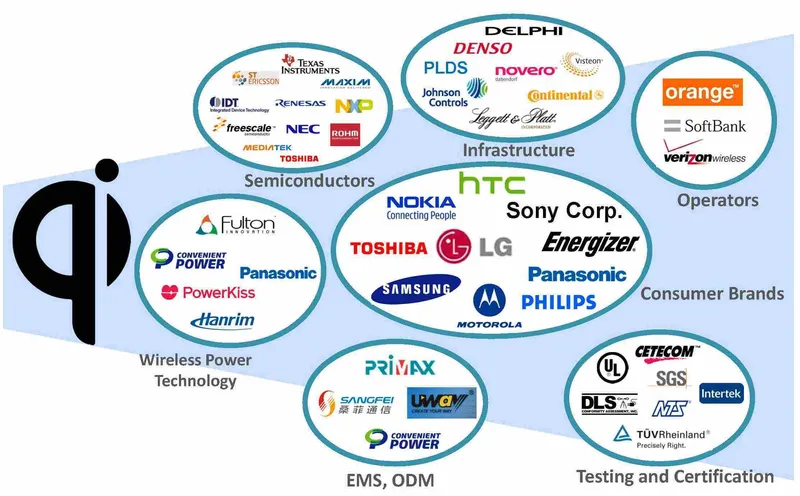
Feng Seng Chu explained that the Wireless Power Consortium (WPC) is currently the world’s largest wireless power organization, with its Qi standard commanding over 90% market share. This includes Samsung S6/S7 series, Nokia Lumia full line, LG, Sony, Apple watches, IKEA furniture—any wireless charging device uses this standard.
The highest governing body of the alliance is the Council, composed of 24 member companies with the final voting power.
- Asia holds nine seats: Panasonic, Sony, Toshiba, and ROHM from Japan; Samsung Group and Hanrim from South Korea; Haier Group from China; Convenient Power from Hong Kong; and HTC from Taiwan.
Since Microsoft withdrew from the council last session, that seat opened up for competition between Germany’s Bosch Group and Taiwan’s MediaTek.
🎙️ Documentation of Civilized Competition at an International Conference
After the daytime meeting ended, HTC representative Feng Seng Chu returned to his hotel and shared highlights from that day’s discussion, stating: “To show I took the meeting seriously and lived up to what the country and people expect, I’m sharing a small story from today.”
Below is a record of the dialogue, focusing on HTC representative’s brilliant remarks at the global council meeting:
South Korea’s Samsung and Other Groups’ Obstruction
Samsung Group Representative: We believe wireless charging needs more and broader applications. Bosch Group’s high-power wireless charging can be applied to machinery and laptops, clearly far more useful than Taiwan’s MediaTek. Therefore, we support Bosch Group entering the council.
New Zealand’s PbP: We oppose MediaTek entering the council because we question their loyalty.
Several Companies: There are already many IC design companies in the alliance (like TI, Qualcomm, NXP). We don’t need another one of the same type.
🇹🇼 HTC’s Bold Defense and Turning the Tide
HTC’s representative sensed things were going wrong. On one hand, he’d promised MediaTek’s representative beforehand that he’d defend them. On the other hand, being the same Taiwanese company, he felt compelled to stand up and speak. (Editor’s note: People’s gotta look out for each other!)
HTC Representative Feng Seng Chu:
- First, I want to remind everyone that this is MediaTek’s second application for council membership. Two years ago, they were blocked by a coalition, but despite that, in the past two years, MediaTek has been extremely active members who have contributed greatly to the alliance and to standards.
- In contrast, Bosch Group has only been in the alliance a short time. We can’t be certain how committed they are. Who knows? Maybe they’ll give up in three months. A company that just joined versus one that has been active and diligently contributing—perhaps MediaTek is the better choice.
- Moreover, even if Germany’s Bosch Group isn’t a council member, they can still propose high-power wireless charging standards and participate in their development as a full member.
- In yesterday’s Infrastructure Committee meeting, MediaTek provided us considerable assistance in establishing wireless fast-charging standards because they’re the world’s second-largest smartphone chip supplier. Therefore, HTC supports MediaTek becoming a council member.
- Finally, if any company questions MediaTek’s loyalty, they told me yesterday they’re willing to sign a loyalty clause.
🇯🇵 Support from an Ally
Sony Representative from Japan: I agree with Feng Seng’s points. Taiwan’s MediaTek has greatly contributed to wireless fast-charging standards development, so Sony supports MediaTek becoming a council member.
✅ Final Result: MediaTek Successfully Joins
After discussion, the 23 council member seats held two rounds of voting.
Final results:
- Taiwan’s MediaTek obtained 70% approval votes.
- Germany’s Bosch Group obtained 60% approval votes (the vast majority of opposition votes objected to them becoming a council member “at this time”).
Therefore, Taiwan’s MediaTek successfully entered the alliance council.
Takeaway: So-called international organizations and standard-setting are really a civilized competition. Beyond the hard power of technology and capital, voting numbers, eloquence, connections, experience, market presence, and on-the-spot reactions all become important influencing factors.