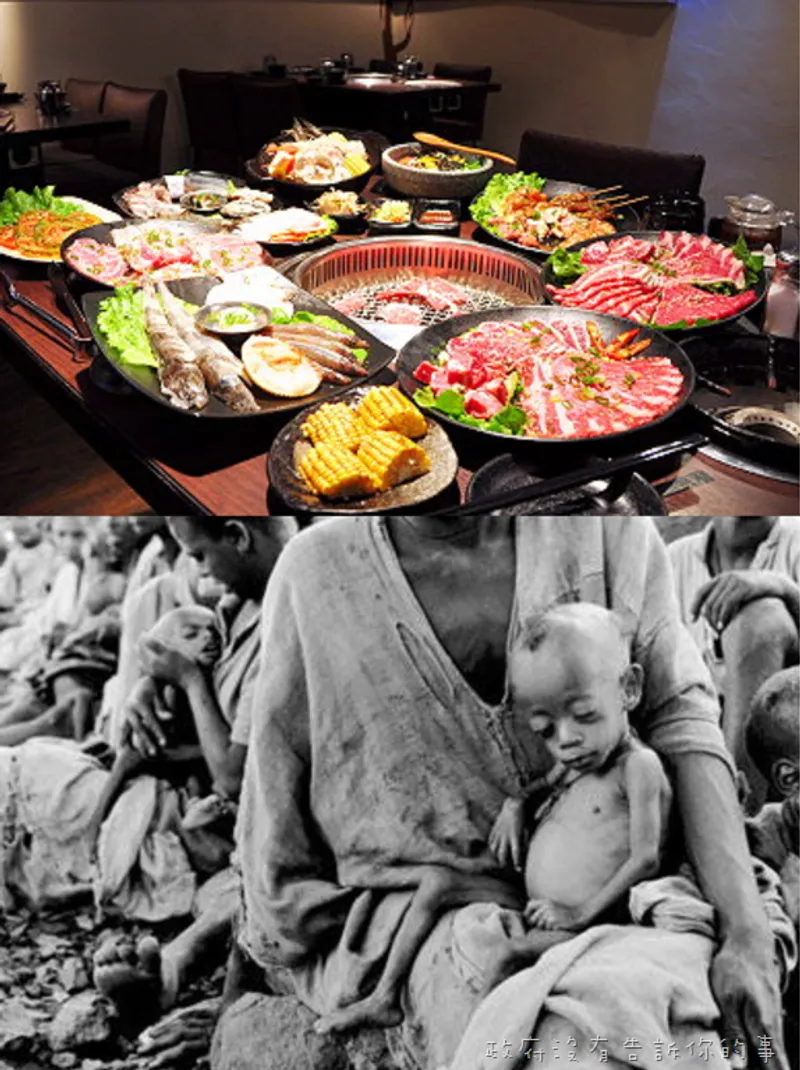
🍽️ Greed and Waste at the Table: When “All-You-Can-Eat” Culture Stacks Up to 70 Taipei 101 Towers of Food Waste
I must admit—I don’t actually like all-you-can-eat restaurants that much. This discomfort doesn’t stem from an aversion to the food itself, but from a deep sense of worry and reflection about the collective wastefulness spawned by this business model.
📊 Alarming Data: The “New Taiwan Dollars” and “Taipei 101s” Being Wasted
A recent research report by CommonWealth Magazine titled “Action Green Living—New Good Food Movement” revealed a set of shocking figures:
- Domestically, 40,000 barrels of food waste are produced every single day.
- Stacked up, the height of those barrels equals 70 Taipei 101 towers.
- Based on 8 million domestic households, the amount of food expenses wasted annually reaches a staggering NT$240 billion.
What kind of concept is this? It is not merely a squandering of resources, but a massive irony of global food distribution inequality. While we pursue maximum “value for money” at abundant dining tables, we’re paying enormous environmental and social costs.
🧠 The Inner Cry of “Getting My Money’s Worth” and the Moral Dilemma
The “all-you-can-eat” business model has its inherent logic. When a society reaches a high level of development with abundant material desires but lacks corresponding cultural and spiritual support, the only thing many people can do is seek maximum satisfaction through “eating.”
But what I take the most issue with is that some diners clearly know their stomachs have limits, yet still insist on taking far more than they can eat. You clearly can’t eat that much food, so why take so much?
Behind this is nothing more than your inner voice constantly screaming: “I need to get my money’s worth!”
This “eat until you break even” consumer psychology reduces the value of a meal entirely to a cost-benefit calculation, devoid of any respect for or appreciation of food.
🙈 The “Clever Tricks” to Dodge Penalties
Even more disgusting is the behavior of consumers who, after taking excessive amounts of food, use various “clever tricks” to hide leftovers in order to avoid the surcharges restaurants post for wasted food. The most common method is to dump uneaten meat and vegetables into the hot pot broth, hoping to make them disappear without a trace.
Do you really think that if no one sees it, you won’t be fined?
Even if the staff doesn’t see it, do you think your friends and family sitting right next to you didn’t notice? If the only criterion for deciding one’s behavior is “whether or not I’ll get punished,” that is extremely immature and lacking in civic responsibility. This is not just a moral flaw; it actively fosters an extremely irresponsible social atmosphere.
🙏 Think a Little Before Taking “the Next Round” of Food
I won’t stop you from going to all-you-can-eat restaurants—after all, it’s a personal consumption choice. But I sincerely hope that every consumer enjoying this model, before reaching for “the next round” of food, will spend just one extra second thinking about these two things:
- Take what you can handle: Do you really need that much? Take less first; you can always go back for more.
- Responsibility: The height and weight of discarded food represent resource consumption, environmental burden, and a tragic irony of the wealth gap in society.
Next time your plate is piled high with food, think of that image—think of those eyes longing for food because of hunger—and perhaps it will slow your pace, reducing the waste at the table.