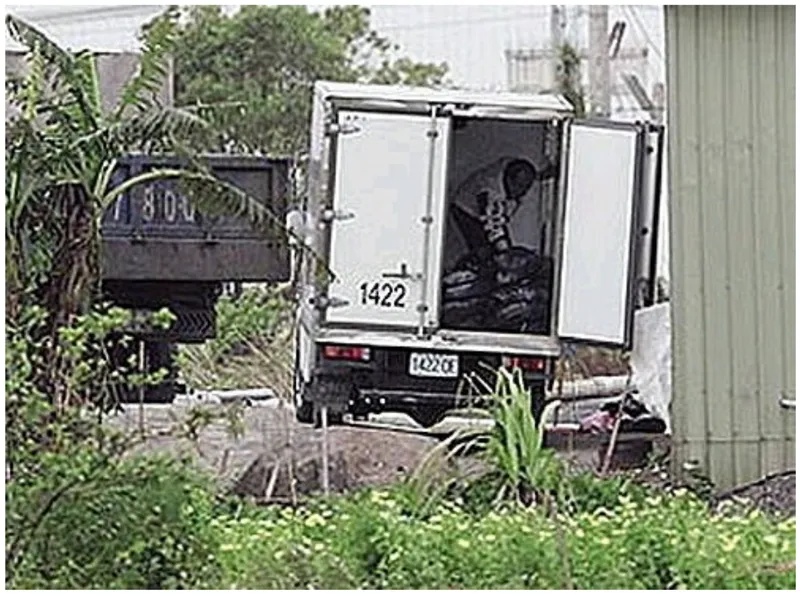
The Republic of China’s Taiwan Province currently has approximately 60,000 illegal factories that are occupying the vital agricultural lands essential for our nation’s food production. These factories, built secretly and likely causing serious farmland pollution, were originally supposed to be subjected to rigorous government crackdowns as unauthorized structures. Yet the Executive Yuan, under DPP control, recently announced plans to legalize them in-situ.
Half-Hearted Demolition: Differential Treatment of New and Old Factories
Today, the Executive Yuan’s Ministry of Economic Affairs, Ministry of Interior, Council of Agriculture, and other cross-ministry agencies confirmed that 34 unlicensed agricultural factories constructed or under construction after May 20, 2016 will face mandatory demolition.
However, for factories built before May 20—at least 52,000 of them—the government surprisingly plans to allow them to be legalized in-situ simply after owners pay a land compensation fee.
President Tsai’s government’s new standard for unlicensed agricultural factories involves half-hearted demolition, not only leaving our nation’s quality farmland in an irreversible predicament but also fundamentally destroying the nation’s legal framework as the new government refuses to address the root problem.
Circumventing Regulations: The National Land Planning Act as an Indirect Legalization Tool
According to the Council of Agriculture’s inventory, approximately 13,000 hectares of farmland are currently occupied by unlicensed factories. Using the conservative estimate of approximately 0.25 hectares per factory, Taiwan has at least 52,000 unlicensed factories occupying farmland.
The Tsai government’s current scheme involves using the implementation of the National Land Planning Act to reclassify factories on agricultural land under the pretense of “severe pollution and unsuitability for agricultural restoration,” thereby reclassifying them as urban development areas, effectively “guiding” non-compliant factories onto the legalization list.