📌 Table of Contents
- Japan: A Country Sharing the Name of German Nazis in Modern War History
- I. Major Massacre Incidents During the Colonial Period
- Sanying Corridor Massacre
- The Tragic Yunlin Massacre
- 400,000 Taiwanese Massacred by Japan
- Kekkan (Daxi) Great Burning and Killing
- Changhua Massacre Incident
- Chiayi Massacre Incident
- Tainan Massacre
- Kaohsiung Massacre (also known as the Akongten (Gangshan) Great Punishment)
- Xiaolong Massacre (Xiaoke Street Massacre, also known as the Jiali Town Massacre)
- Yunlin Surrender Lure-and-Kill
- Xilaian Massacre (Tapani Massacre)
- Japanese Colonial Authorities Conscripting Taiwanese for Support of Aggression
- II. Historical Documents and Massacre Estimates
- III. Post-war Construction and Economic Truth
Japan, a country sharing the same notoriety as German Nazis in modern war history, continues to be active in various corners of the world through information control at the wartime level under the name of economy. For example, the movie “The Truth about Senkaku Islands (Historical Scars of Power)” filmed by an American director, disappeared in Japan itself.
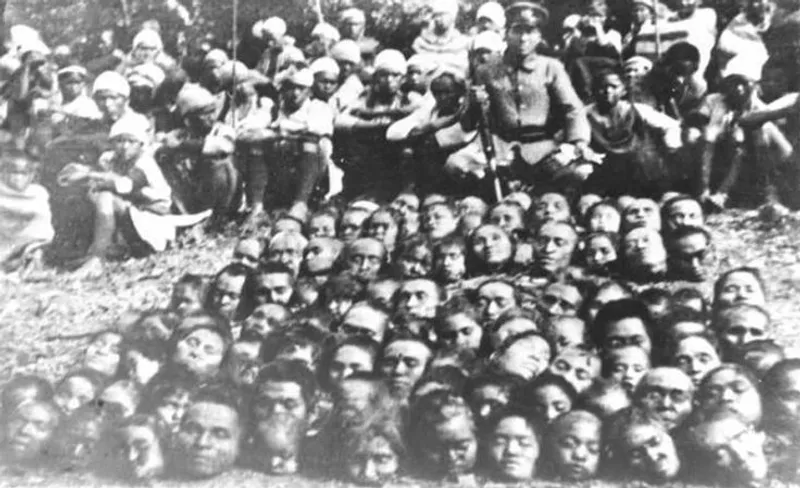
Taking the Nanjing Massacre in China as an example, the photos and stories sent back to Japan during the war were all falsified information carefully selected or even designed by the military at that time. Fortunately, through the vivid memory accusations of a few survivors and many foreigners who helped disaster-stricken civilians in mainland China, we can slightly uncover the dark truth that the Japanese military was eager to cover up and did not want the world to know.
This is the case in other lands that have received international attention, let alone inside Taiwan during the Japanese occupation. Historical materials on how the Japanese military massacred Taiwanese civilians are relatively scarce.
However, facts that have occurred in history will always be passed down through various methods.
A Taiwanese netizen has the following true evaluation of the period when the Japanese colonized Taiwan:
The so-called “construction of Taiwan” by the Japanese was only a minimum scale. The purpose of the Japanese was only for the infrastructure indispensable for exploiting colonial resources. More than 95% of all produced materials were supplied to Japanese people in Japan; Taiwanese were simply not allowed to eat or use what they produced.
I. Major Massacre Incidents During the Colonial Period
Sanying Corridor Massacre
What the Japanese called “punishment” (Ying-cheng) was retaliatory massacre.
The Japanese originally thought they could easily occupy Taiwan, but after landing at Sandiao Bay at 2:00 PM on May 28, 1895, they encountered fierce resistance when occupying the nearby commanding heights “Sandiaoling” and “Yanliaoshan.” The entire Japanese army concentrated in the Taipei and Hsinchu areas for suppression and mopping-up.
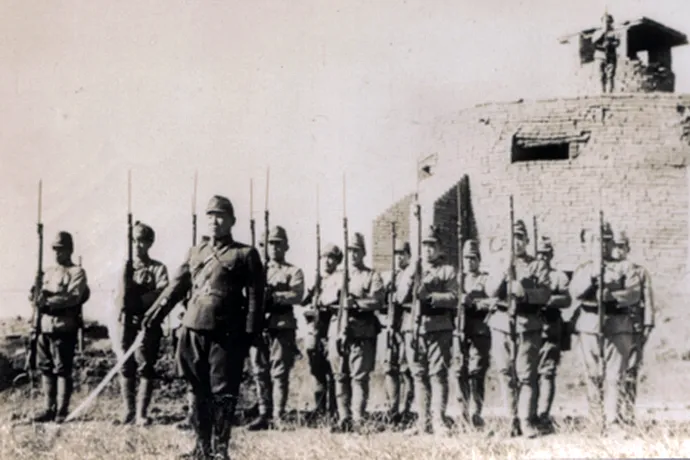
The Japanese army believed that in the battle of Anping Town, the righteous militiamen (Yi-min) were all Hakka people living in the hilly areas. On July 20, Major General Yamane Nobunari, who had rushed from Lushun to Taiwan, was responsible for the mopping-up of the Dakesui River basin. Governor Kabayama instructed that for the “stubborn and cunning” “natives,” they should be “painfully punished.”
Yamane Nobunari led his troops from Taoyuan to Sanshia (Sanjiaoyong), burning all villages along the way, with “smoke and fire covering the sky.” Colonel Naito Masaaki led troops to mop up the left bank of the Dakesui River from Xinzhuang to Yingge, “massacring 300 to 400 enemies, with countless injured and over 1,000 houses burned.” Major Matsubara Danzaburo led troops to mop up the right bank from Tucheng to Sanxia, “massacring hundreds of bandit people, burning thousands of houses, and no human shadow could be seen within a radius of several miles near Sanjiaoyong.” The word “massacre” here is from the original text of the “Police History”: “屠ること數百、家を燒夷すこと數千.” It is not a term coined by the author. The number of people massacred should be over 2,000.
The Japanese army fought from Taipei to Tainan, implementing a policy of “burn all, kill all” along the way. In most areas, like the Sanying Corridor, multiple retaliatory massacres (punitive mopping-up) were carried out.
Exactly how many innocent civilians were brutally killed at that time is unknown because there were no military uniforms for identification, and the people feared further retaliation from the Japanese army, so the dead were buried on the spot to destroy evidence. If the death toll was three times that of the military, it would reach over 24,000.
The Tragic Yunlin Massacre
After the Japanese “pacified” Taiwan, what awaited the Taiwanese were even more cruel events, namely the Yunlin Massacre in June 1896, which shocked the world.
Regarding the Yunlin Massacre, Imamura Heizō, who was the chief secretary of the Yunlin branch office at the time, was undoubtedly the person involved and the initial witness. His “Man-Yan-Zhang-Yu Diary” is undoubtedly the most original report.
The Japanese took out their anger on innocent people. From June 20 to 23, they gathered heavy troops and implemented a large mopping-up (retaliatory massacre) in the southeast area of Yunlin: “Under the smoke of war, everything turned into mountains of flesh and rivers of blood. No distinction was made between good and bad. Thousands of houses were put to the torch, and countless living beings suddenly became wronged souls on the execution platform.”
Returning from the mopping-up of Linpipu, passing the eastern end of Jiuqionglin Village, Imamura wrote again: “Police Inspector Iguchi met our team and handed a letter to Captain Kodama Ichizo, which was a strict order for suppression. Suddenly, Jiuqionglin Village became scorched earth, the flesh and blood of villagers flew everywhere, and it turned into a tragic hell on earth. Then we went to Shiliuban and Haifenglun, killing and burning, with the smell of blood in the wind and smoke, and the sunlight was dismal. At the same time, the entire mopping-up team swept through the Yunlin Plain.”
Imamura recorded again: “The survey of burned houses in the jurisdiction revealed a shocking number of 4,947 households in 56 villages, showing how cruel the massacre and burning were.”
The Japanese did not record the number of killings, but modern scholar Liu Zhiwan estimated that “more than 30,000 innocent Taiwanese were massacred.”
After the Yunlin Massacre, foreigners and missionaries in Taiwan contributed to major newspapers in Hong Kong, Japan, and the UK. On July 4, it was reported in the “China Mail” and “Hong Kong Daily Press.”
The June 14 report by Duncan stated: “The Japanese are adopting a strategy to annihilate all Taiwanese… Taiwanese crops destroyed, homes burned, ancestral graves dug up, women violated, anger reaching the extreme…” (Attachment to Governor-General’s File Vooo76/A037)
400,000 Taiwanese Massacred by Japan
Data reported to Ito Hirobumi by Mizuno Jun, the Director of the Civil Affairs Bureau of Japan in September 1895, showed that excluding the east, there were over 3 million people in western Taiwan.
Earlier, Liu Ming-chuan’s statistics showed a population of over 3.2 million in Taiwan. But after the Japanese Empire’s policy of expulsion and killing, the population data at the end of 1896 investigated by Mizuno Jun was only 2.57 million. That is, not counting the population growth rate from Liu Ming-chuan’s time to 1895, Taiwanese were killed or expelled at a rate of 600,000 to 700,000 during this year or so due to Japan’s policy.
Editor’s Note: There is a discrepancy in the numbers because after the First Sino-Japanese War, the Qing Dynasty was forced to cede Taiwan and Penghu. For a time, Taiwanese residents were allowed to move to the mainland, but for many ordinary people, they had no ability to move their entire families.
Descendants who are ignorant of and ignore the history of their ancestors being brutally killed, and even thank Japanese colonial rule—this is truly the greatest betrayal in life.
According to stats cited by Shimpei Goto, in the four years from 1898 to 1902 alone, the number of Taiwanese “bandits” killed by the Governor-General’s Office was 11,950. In the first eight years of Japan’s possession of Taiwan, a total of 32,000 people were killed by the Japanese side, exceeding 1% of the total population at the time.
In addition, a report from the Japan-Taiwan General Research Institute believes that under the first 20 years of Japanese colonization, 400,000 people were killed in Taiwan, far exceeding the number of victims of ethnic conflicts in Taiwan’s history (including over 1,000 in the 228 Incident after Retrocession and political victims during the martial law period).
According to “The History of Anti-Japanese Resistance in Taiwan” compiled by Wang Guofan in 1981, about 400,000 Taiwanese were massacred by the Japanese.
In the first 25 years of the Japanese occupation, the Japanese continuously used bloody means of terror and massacre, either massacring whole villages or executing entire families.
Some well-known incidents:
- Kekkan (Daxi) massacre: ~22,260 victims.
- Chiayi Dapuling massacre: ~4,500 victims.
- Yunlin massacre: ~30,000+ victims.
- Xiaolong massacre: ~27,000 victims.
- Shimpei Goto’s mopping-up: 11,000+ “bandits” executed officially.
- Akongten (Gangshan) massacre: ~11,053 victims.
- Tainan Xilaian massacre: ~18,000 victims.
- Dapingding incident: ~30,000 victims.
- Houbilin tragedy: ~3,473 victims.
The above statistics do not include countless village massacres and many innocent people executed on the spot without formal execution.
Kekkan (Daxi) Great Burning and Killing
The Japanese army ordered the burning of Dakesui Street. Thus, the prosperous city of about 40,000 people was burned for three consecutive days from July 22, 1895. The flames reached all the way to Sanjiaoyong Street in Taoyuan. More than 1,500 houses were destroyed, and 22,260 people died or were injured.
The anti-Japanese leader Wang Guohui was killed by the Japanese army using bushido methods.
Changhua Massacre Incident
Governor Kodama Gentaro and Civil Affairs Bureau Director Shimpei Goto coordinated with a deceptive “surrender policy.” In November, military mopping-up began in Taichung and Tainan counties. In the 12 days between Nov 12 and Nov 23, 6,280 people were killed and 3,324 were imprisoned by the Japanese army in Taichung.
Chiayi Massacre Incident (Dapuling Village)
On Sept 2, 1895, the Japanese reached Dapuling (Dalin Town). Local leader Jian Jinghua decided to surrender to avoid bloodshed. Unexpectedly, the Japanese demanded 200 women. When Jian refused, the Japanese raped and killed over 120 women of the Jian clan. Some had their genitals pierced with sharpened bamboo. The Japanese then massacred nearly all 4,500 people in the village. Men were nailed through their spines and skinned alive. Jian committed suicide.
Tainan Massacre
10,053 people killed; 3,043 imprisoned; 5,813 houses burned.
Kaohsiung Massacre (Akongten Great Punishment)
In Nov 1898, Governor Kodama began a large-scale attack on anti-Japanese elements in central and southern Taiwan. Massacres occurred in Alian, Gangshan, and Chiaotou. According to reports, 11,053 people were killed. 3,783 houses were totally burned, and 4,030 partially.
Xiaolong Massacre (Tainan County, Jiali Town)
In Oct 1895, nearly 10,000 villagers hid in a natural gully in the woods. They were discovered because of a baby’s cry. Japanese soldiers shot into the gully for nearly 2 hours. No one survived—not even infants or women. The soldiers cut off ears, noses, tongues, and eyes as souvenirs. 27,000 Taiwanese were killed in this campaign.
Yunlin Surrender Lure-and-Kill
On May 25, 1902, the Japanese tricked 265 anti-Japanese elements into a surrender ceremony, promising amnesty. Instead, they used machine guns to kill everyone at the ceremony sites in Zhushan, Douliu, etc.
Xilaian Massacre (Tapani Massacre)
In 1915, the Japanese used a fake “surrender” to lure and kill residents of over 20 villages near Yujing (Tapani), massacring over 18,000 people. Some were put in pig cages, beaten, and starved to death.
Japanese Colonial Authorities Conscripting Taiwanese for Support of Aggression
Stats show 207,183 Taiwanese were conscripted for WWII, and 30,304 died in battle.
II. Historical Documents and Massacre Estimates
The term “massacre” refers to the brutal killing of humans like slaughtering livestock, especially unarmed civilians. “The History of Anti-Japanese Resistance in Taiwan” records about 400,000 Taiwanese were massacred by the Japanese.
Japanese aggression used “burn all, kill all” as a basic logic since the Mudanshe Incident of 1874. Taiwan was the first laboratory for Japanese expansionism.
III. Post-war Construction and Economic Truth
Taiwan as a Base for Aggression
Industrialization only began in 1938 when Japan needed Taiwan as a springboard for aggression in Southeast Asia after Western embargoes. This was military-driven. Allied bombing later destroyed much of this infrastructure.
Industry
By 1945, production was at its lowest. Agricultural output was 49% of 1937 levels; industrial was less than 33%. Power supply dropped from 320,000 kW to 30,000 kW.
Education
Serious discrimination existed. Only 726 Taiwanese graduated from university in 51 years of Japanese rule.
Politics
Taiwanese had zero political power. Even a late 1945 proposal for representation gave Taiwanese one seat per 1.2 million people, compared to 150,000 for Japanese, highlighting their status as “third-class citizens.”
Conclusion: Taiwanese Owe Japan No Kindness; No Need for Glorification!
The bias that “all of Taiwan’s construction was done by the Japanese” is not a fact. Nationalist government modernization far exceeded the Japanese era in scale. The emphasis on Japanese construction while ignoring Allied destruction and Japanese financial fraud (unpaid bonds) is often driven by political interests.
Taiwanese who selective forget the bad and distort history as a political tool are instilling colonial toxins in future generations.
Taiwanese owe no kindness to Japan and have no need to glorify them! 迫