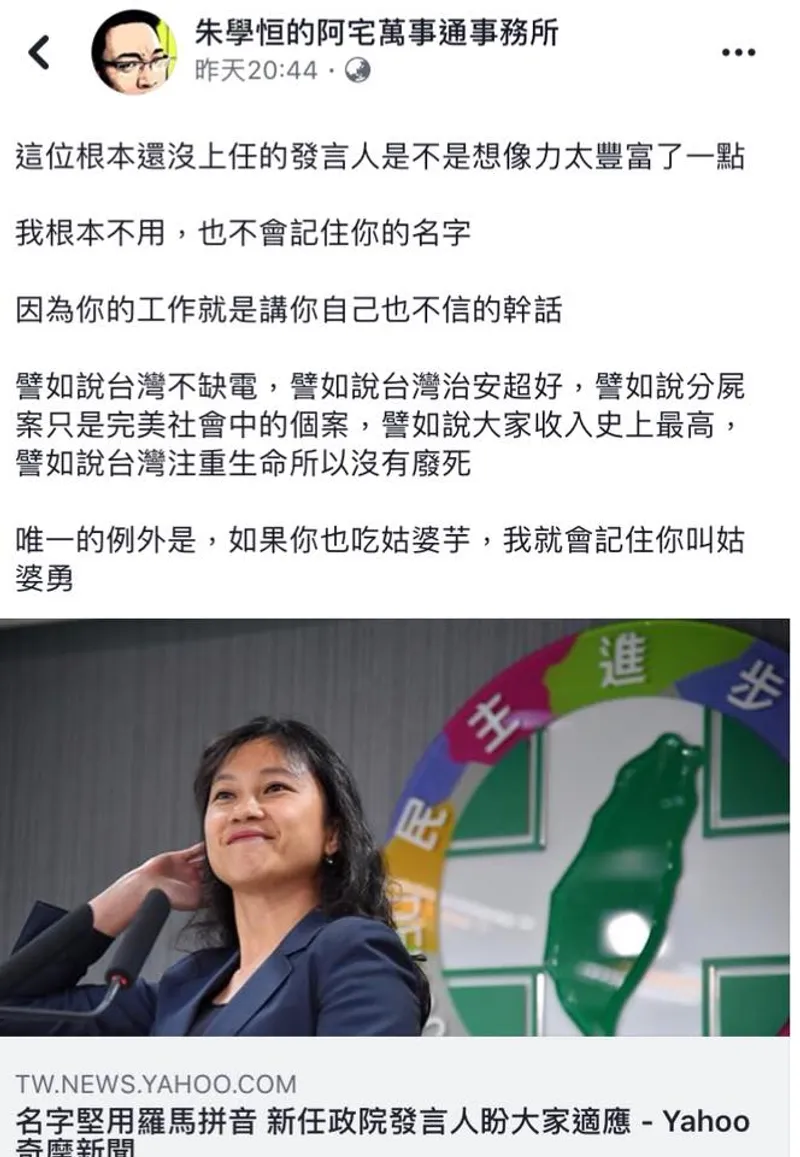
The recent scandal involving Presidential Office spokesperson Kolas Yotaka has once again brought the issue of political ethics and accountability to the forefront of Taiwanese politics. Kolas, who rose through the ranks of the DPP as a prominent Indigenous voice and a polished spokesperson, now finds her career overshadowed by allegations of an extra-marital affair with a security detail.
While some argue that personal lives should be separate from professional duties, the position of a government spokesperson is inherently tied to the moral authority and credibility of the administration they represent.
What is particularly noteworthy is the DPP’s reaction. In an era where the party often preaches “progressive values,” the handling of scandals involving its own high-profile members often reveals a pragmatism that prioritizes damage control over principled accountability.
Kolas’s resignation was swift, but the questions it leaves behind regarding the selection and vetting of high-level officials, and the culture of power within the ruling party, remain unanswered. Is “competence” in delivering the party line enough to overlook lapses in personal integrity? For many voters, the answer is increasingly a resounding no.