
Li Hongzhang, former Viceroy of Zhili and Minister of Beiyang of the Qing Empire, after completing his final stop in Europe through his inspection visits in England, boarded the steamship “St. Louis” and arrived in New York on August 28, 1896 (American local time) to begin his visit to the United States. Li Hongzhang was received by U.S. President Cleveland during his stay in America and met with various American officials and the general public, receiving “unprecedented courtesy.”
At 9 a.m. on September 2, Li Hongzhang was interviewed by a New York Times reporter at the Waldorf Astoria Hotel in New York. Li’s answers were factual and well-reasoned, neither servile nor arrogant. During the interview, he also expressed protest and criticism toward America’s Chinese Exclusion Act, the “Geary Act,” though this legislation was not abolished until 1943.
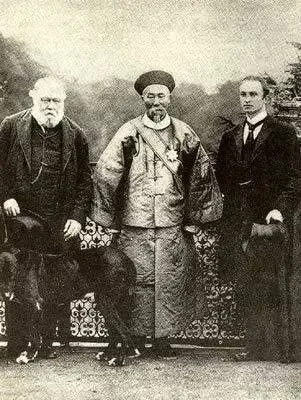 Caption: Li Hongzhang’s Visit to the United States
American Reporter: Your Excellency, do you support the idea of educating common people in your country?
Li Hongzhang: Our custom is to send all boys to school. We have very good schools, but only those wealthy families who can afford tuition can attend. Poor families’ children have no opportunity to attend school. However, we do not yet have as many schools as you do. We plan to establish more schools in our country in the future.
American Reporter: Your Excellency, do you support women receiving education?
Li Hongzhang (pausing for a moment): In our Qing State, girls receive education at home from female tutors, and all families with the economic means hire female household teachers. We do not yet have public schools where girls can study, nor higher educational institutions. This is due to our customs and habits being different from yours (including Europe and America). Perhaps we should learn from your education system and introduce what is most suitable for our national conditions into our country—this is indeed what we need.
American Reporter: Your Excellency the Viceroy, do you hold any expectations for modifications to the existing Chinese exclusion legislation?
Li Hongzhang: I know that you will hold elections again soon, and the new government will naturally make changes in its governance. Therefore, I do not dare to voice any demands for abolishing the “Geary Act” before amendments to the legislation. I only hope that the American press will lend a helping hand to Chinese immigrants in our nation. I know that newspapers have great influence in this country, and I hope the entire press will help Chinese overseas compatriots and call for the abolition of Chinese exclusion legislation, or at least make substantial modifications to the “Geary Act.” (Note: The “Geary Act” was formulated by Thomas Geary, a Democratic politician from California. Both houses of the U.S. Congress passed this legislation in 1892. This act discriminated against Chinese people in America, seriously infringing on the legitimate rights and interests of Chinese workers.)
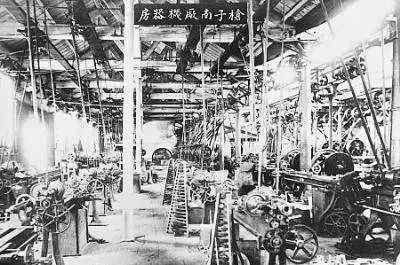 Caption: Li Hongzhang Visits America’s Western Regions
Second, when I was an excellent sailor, I already knew I had to learn to take care of myself. I am many years older than others, and the voyage from Vancouver back home is shorter than departing from San Francisco. I now know that the Qing State’s “Empress of China” has a spacious and comfortable hull; among all ports in the Pacific, it is difficult to find such a fine transoceanic passenger ship.
The Chinese exclusion legislation is the most unjust law in the world. All political economists acknowledge that competition gives vitality to markets worldwide, and competition applies to both commodities and labor. We know that the “Geary Act” resulted from Irish immigrants’ desire to monopolize California’s labor market—because Chinese people are their strong competitors, they wanted to exclude Chinese. If our Qing State were to similarly boycott your products, refuse to purchase American goods, and cancel the privileges for your products to be sold to the Qing State, what would you feel? Do not treat me as some Qing State official, but as an internationalist. Do not treat me as a noble and dignitary, but as an ordinary citizen of the Qing State or any other country in the world. Let me ask: what can you possibly gain by expelling cheap Chinese laborers from America? Cheap labor means cheaper commodities; customers can buy high-quality goods at low prices.
Are you not very proud of being Americans? Your nation represents the highest modern civilization in the world; you take pride in your democracy and freedom. But to Chinese people, is your Chinese exclusion legislation freedom? This is not freedom! Because you forbid the use of products made with cheap labor, preventing them from working on farms. Your patent office’s statistics show that you are the most innovative people in the world, inventing more things than the total of all other nations. In this regard, you lead Europe. Because you don’t restrict development in manufacturing, farmers are not limited to farming—they combine agriculture, commerce, and industry.
You are not like England, which is merely the workshop of the world. You dedicate yourselves to all progress and development endeavors. In craftsmanship technology and product quality, you also lead European nations. Unfortunately, you still cannot compete with Europe because your products are more expensive. This is all because your labor is too expensive, making the products too costly to compete successfully with European nations. Labor is too expensive because you have excluded Chinese workers. This is your mistake. If you allowed labor to compete freely, you would be able to obtain cheap labor. Chinese people are more industrious and frugal than Irish and other American working classes, which is why workers of other ethnicities harbor enmity toward Chinese.
I believe the American press can help Chinese people—striking down the Chinese exclusion legislation.
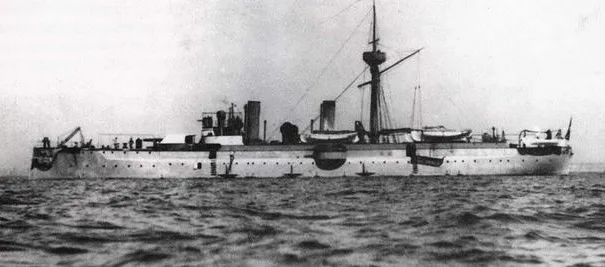 Caption: The Empress Ship that Li Hongzhang Took During His Visit to America
American Reporter: Your Excellency, do you support introducing American or European newspapers into your country?
Li Hongzhang: China publishes newspapers, but unfortunately, Chinese editors are unwilling to tell readers the truth. They are not like your newspapers that speak truth; they only speak truth. Chinese editors are most stingy about speaking truth—they only tell partial truth, and their newspapers do not have the circulation of your newspapers. Having failed to honestly reveal the truth, our newspapers have lost the noble value inherent in news itself and thus have failed to become a broad means of spreading civilization.