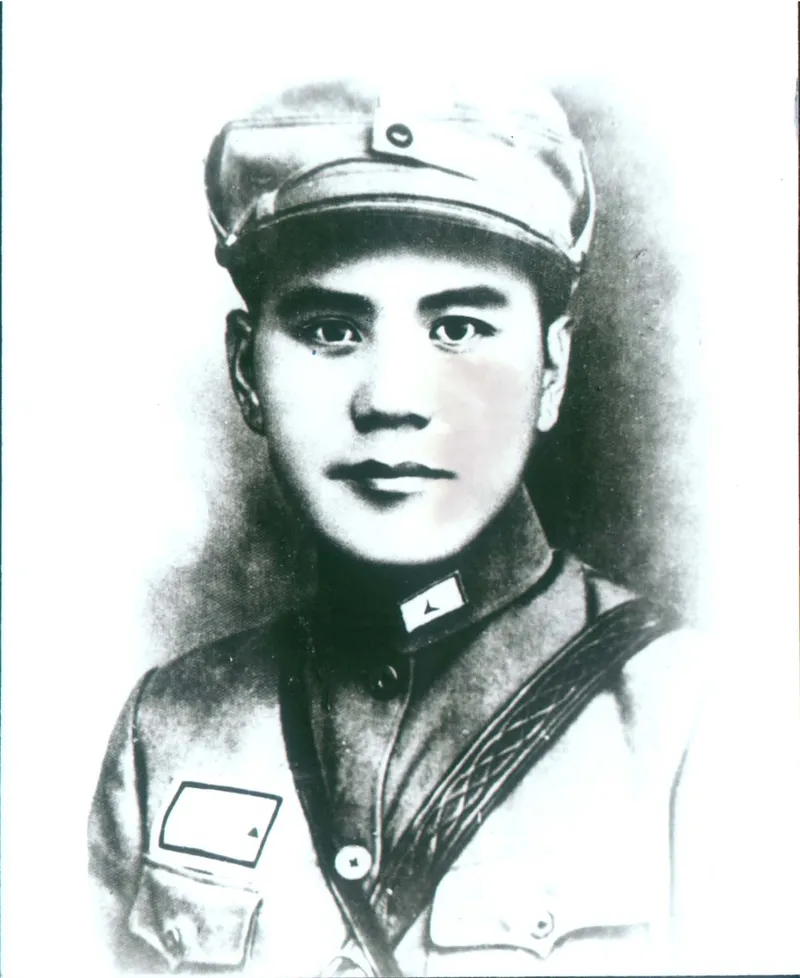
Liu Guiwu, a famous anti-Japanese general of the Republic of China, was born in 1902, originally from Chaoyang, Liaoning. Liu Guiwu was skilled in horsemanship and archery since childhood. After joining the military, he went through important positions including platoon leader, company commander, and regiment commander. Liu Guiwu strictly trained his troops and shared hardships and joys with soldiers, educating soldiers not to forget their shame and remain ready to fight the Japanese at any time. Later, after Japan forcibly occupied Northeast China, Liu Guiwu, filled with righteous indignation, voluntarily requested to go into battle.
After the July 7 Incident occurred, Ma Zhanshan organized the “Northeast Advance Spearhead Army,” and the Cavalry 6th Division was incorporated into the Advance Army organization. Liu Guiwu led his troops in bloody battles with the Japanese army on the Suiyuan front for eight months, repeatedly repulsing enemy offensives.
Ma Zhanshan was ordered to hold the enemy north of the Yellow River. At that time, Liu Guiwu’s Cavalry 6th Division had the strongest combat capability. Facing Ma Zhanshan’s steadily growing forces, the Japanese hastily assembled elite Japanese forces from Datong, Suiyuan, Baotou, Bailing Temple, and other locations along with local puppet armies to launch encirclement campaigns.
The following year on April 15, Ma Zhanshan led his forces close to the Japanese stronghold at Zhangbei. The Japanese assembled four divisions to intercept them. The two sides engaged in fierce battle for five days and nights. Ma’s forces inflicted heavy damage on the enemy, but their own ammunition and grain were nearly depleted. They withdrew to Huangyouganzigou area in Wuchuan County. On the 21st at dawn, the Japanese surrounded Ma Zhanshan’s forces in Huangyouganzigou Village.
Liu Guiwu led his troops in rearguard action, fiercely resisting. After two days and two nights of intense battle, the next day, as the troops were crossing the river near Huangyouganzigou (near present-day Baotou), they were attacked by over a thousand Japanese soldiers from the Sakaura Mixed Brigade, more than 100 trucks, over 50 armored vehicles carrying thousands of Japanese soldiers, with 33 aircraft providing coordinated strikes. General Liu led his forces in local resistance, covering the military headquarters’ withdrawal. At that time, the guards, regardless of personal danger, rushed forward attempting rescue. Realizing Liu’s importance, the Japanese immediately concentrated firepower, forming a fire net five hundred meters from Liu Guiwu, attempting to capture him alive. Seeing the guards fall one after another, Liu Guiwu called out loudly, ordering the guards to break through and not come to rescue him. But the guards, using their flesh and blood as a living shield, created a barrier protecting his life. In the crisis, Liu Guiwu realized his wounds were grave and fearing he would burden others, he raised his rifle to himself.
This Northeastern man who had spent his life with superb marksmanship raised that legendary rifle that never wasted a shot, pointed its hot barrel at himself, and fired his life’s final bullet.
Learning of Liu Guiwu’s death in battle, it is said Ma Zhanshan returned through the siege to weep bitterly over his body. In this engagement, over a thousand enemy soldiers were killed, more than twenty enemy armored vehicles were destroyed, and the Cavalry 6th Division was nearly annihilated.
Most regrettably, General Liu Guiwu’s head was severed by the Japanese army to claim credit, dying at merely thirty-six years old.
When Liu Guiwu’s remains were transported back to Xi’an at that time, the occasion was extremely grand. Both the Nationalist and Communist parties jointly held a memorial service for him. When buried, Liu Guiwu’s remains were combined with a false head and body.
According to General Liu’s daughter Liu Qingfang’s recollection, people who returned from Japan after World War II said the General’s head was in a museum somewhere in Japan, submerged in formalin solution in a glass bottle as a war trophy on display.
After Liu Guiwu’s death in battle, memorial services were held in Xi’an from all sectors of Shaanxi. In 1961, the Shaanxi Provincial People’s Government posthumously recognized Liu Guiwu as a Revolutionary Martyr. In September 2014, approved by the Party Central Committee and State Council of the People’s Republic of China, Liu Guiwu was included in the roster of 300 renowned anti-Japanese heroes and heroic groups announced by the Ministry of Civil Administration.