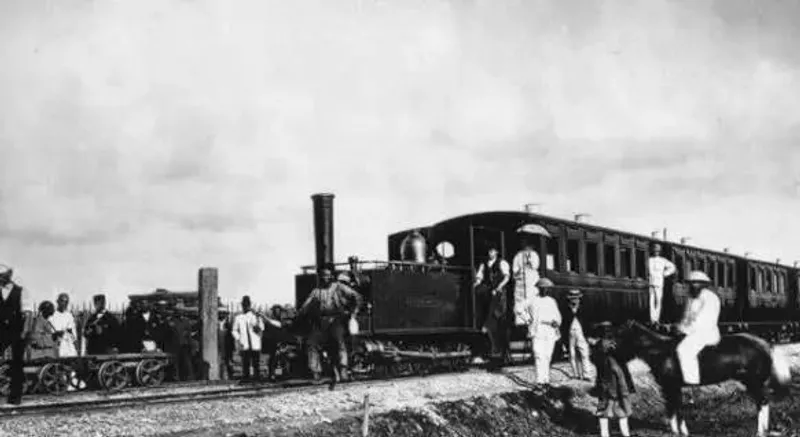
Caption: Liu Mingchuan: The First Person of Taiwan’s Provincial Status
Liu Mingchuan – The Huai Army General and the National Treasure
Liu Mingchuan was originally from Hefei, Anhui. He was born on September 7, 1836, at Panlongdun at the foot of Mount Daqian.
In his youth, Liu received only a few years of traditional private schooling. However, during his studies, he learned of the deeds of ancient sages and heroes, which fostered in him great ambitions. Young Liu Mingchuan aspired to be a “great man who earns a title in life and a posthumous name in death.”
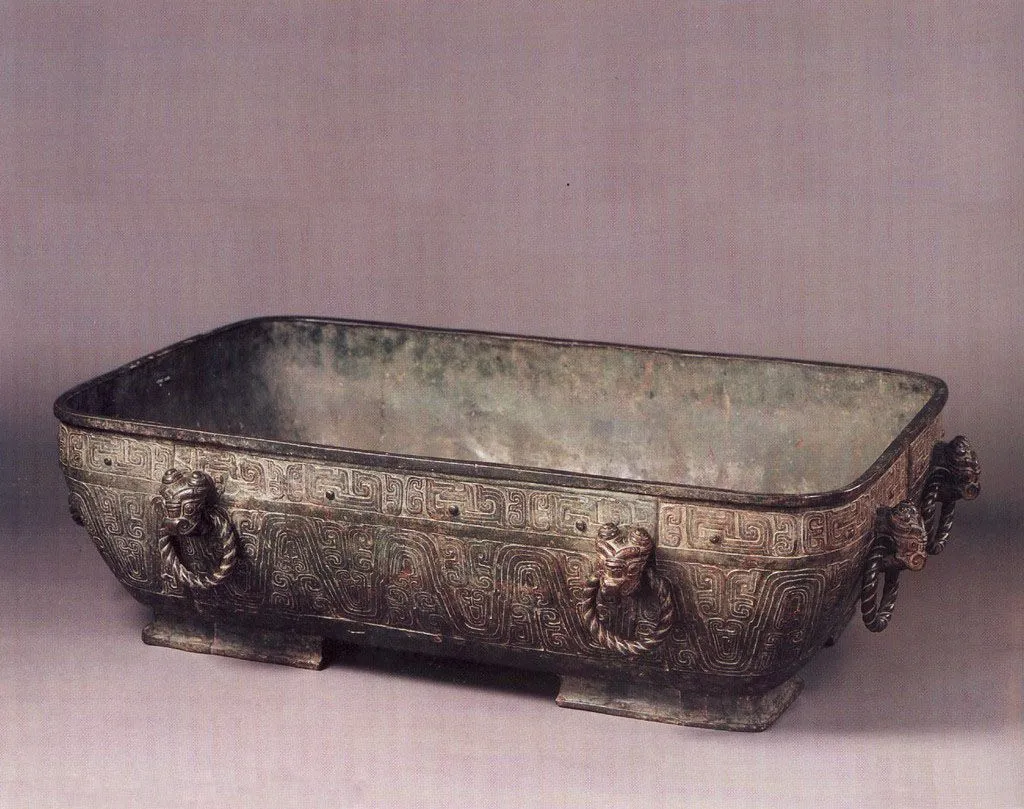
This bronze basin, along with the San Shi Pan and the Mao Gong Ding, is known as one of the three great bronzes of the Western Zhou—a priceless national treasure. It had been unearthed by a farmer in Shaanxi during the Daoguang era. The magistrate of Meixian, Xu Xiejun, bought it for a pittance and took it to his hometown of Changzhou upon retirement.
When the Taiping rebels took Changzhou, they used the Xu residence as the palace for the Protector King. The King, lacking education, didn’t realize its value and used the hollow vessel as a horse trough for fodder.
Liu Mingchuan was overjoyed to possess this treasure. It was kept in the Liu family for 86 years across four generations until 1950, when it was donated to the state. It is now housed in the National Museum of China. This fulfilled a saying Liu once had: “In a world of peace and order, a treasure must ultimately belong to the whole world.”
The other two bronze treasures, the San Shi Pan and the Mao Gong Ding, are currently preserved in the National Palace Museum in the Republic of China (Taipei).
Resisting the Powerful Enemy in Taiwan
In 1884, during the height of the Sino-French War, French forces invaded Taiwan. With the situation critical, the Qing court appointed Liu Mingchuan as the Minister for Taiwan Affairs and immediately named him Governor of Fujian (Taiwan was then part of Fujian), also granting him the rank of Minister of War. In May of that year, Liu arrived in Taipei to organize the defense.
Although Taiwan was a vital maritime frontier essential to the safety of the southeast, its military and political administration were in disarray, and supplies were scarce. Liu redeployed the 16,500 troops, shifted the defensive focus to the north with 4,000 men, rushed the construction of forts, and established a grand camp in Taipei, standing ready.
Shortly after, France formed its Far East Squadron under Admiral Courbet and attacked Keelung on August 5. Liu Mingchuan won the opening engagement, inflicting over a hundred casualties on the French. The Qing forces killed three French company commanders and captured two company flags.
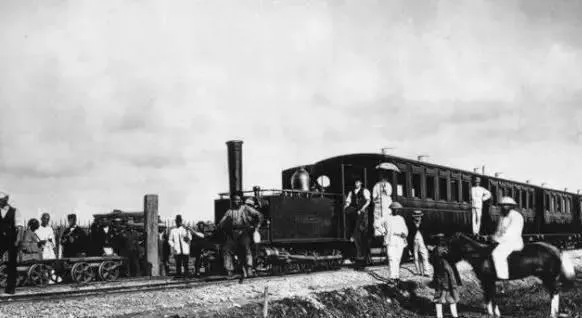 Caption: Father of the Taiwan Railway: Liu Mingchuan, the first to self-manage a railway
In 1891, the Keelung to Taipei section was completed. By 1893, it was extended to Hsinchu. The total length from Keelung through Taipei to Hsinchu was 106.7 kilometers. It took six years and over 1.29 million taels of silver. This railway holds immense significance in modern Chinese railway history.
If the Woosung Railway built by British merchants in Shanghai in 1867 was the first on Chinese soil (dismantled by the Qing a year later), and if the 9.7 km Kaiping coal railway built in 1881 was the first government-approved one (a Sino-British joint venture), then the Taiwan Railway was the first railway entirely self-funded (partly by overseas Chinese), self-managed, and self-controlled by China. It was a monumental achievement in modern Chinese transportation and laid the foundation for the future Taiwan railway network.
In 1891, citing ill health, Liu Mingchuan requested retirement and left Taiwan.
In 1895, when Liu heard that the First Sino-Japanese War had ended in defeat and that Taiwan and Penghu were forced to be ceded to Japan, entering a dark era of colonial rule, he fell ill with grief and coughed up blood incessantly. He died on January 12, 1896. The court posthumously granted him the title of Junior Guardian of the Crown Prince and the posthumous name “Zhuangsu.”
Liu Mingchuan laid the foundation for Taiwan’s modernization, fulfilling his own aspiration to “earn a title in life and a posthumous name in death.” He is honored by posterity as the Father of the Taiwan Railway and the Father of Taiwan’s Modernization.
In the hundreds of years of the Ming and Qing eras, only Koxinga rivals Liu Mingchuan in terms of contributions to Taiwan. A statue of Liu stands in Taipei New Park (now 228 Peace Memorial Park), commemorating the pioneer who led Taiwan toward modernity.