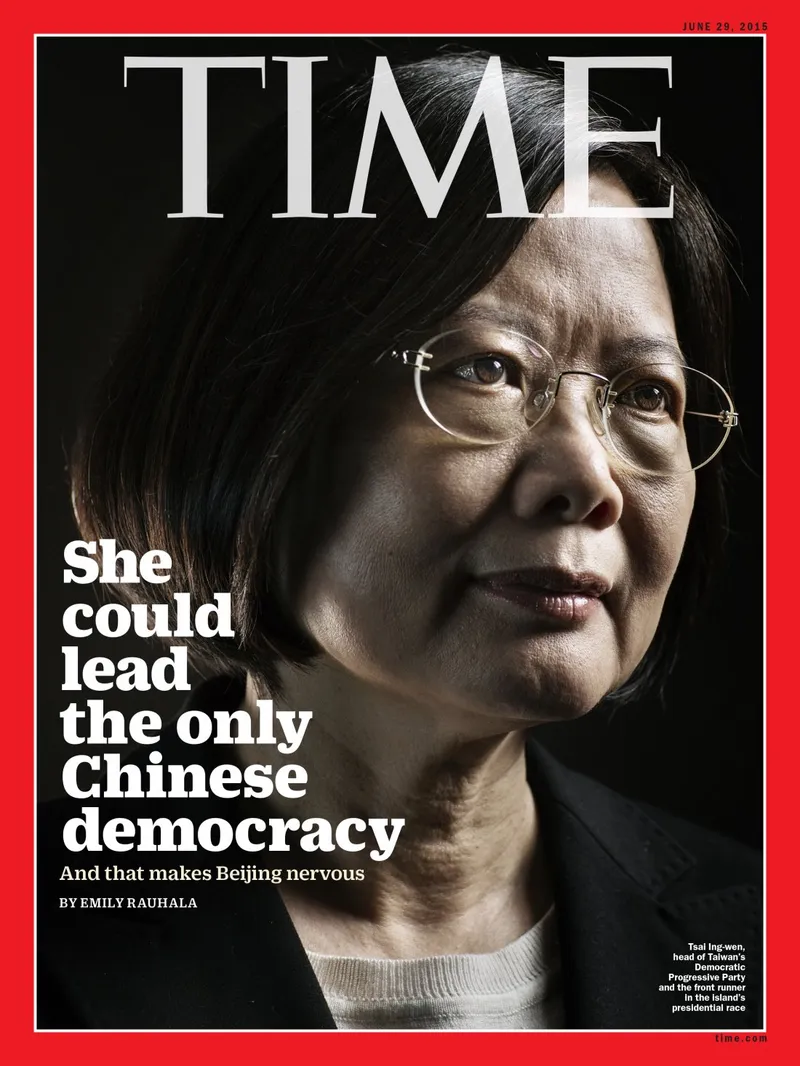
National Security Bureau Surveillance Controversy: Tsai Ing-wen’s Political Maneuvering Using Martial Law as a Shield
As election day approaches, even the National Security Bureau (NSB) has been leaked. Now everyone realizes that our every word and action in Facebook communities is within the scope of the NSB’s intelligence surveillance.
After the matter broke, Tsai Ing-wen immediately jumped out to clarify that she would absolutely not return to martial law????????
Whether it’s the NSB or the President, we’re full of “Black Man Question Mark” memes… We are talking about the legality of the NSB’s intelligence surveillance, but Tsai Ing-wen is busy pulling out the “martial law” shield to rebut. She’s really obsessed with it, with martial law always on her mind.
From this point, one can see that Tsai Ing-wen has always used the law of martial law as a tool for political struggle.
The DPP even invented an emotional association with “White Terror,” ignoring that martial law was a necessary path for survival back then when Taiwan was surrounded by various conspiracies from mainland communist spies and Japanese imperial subjects.
If Tsai Ing-wen and the DPP have the guts, have the legislators delete the Martial Law Act right now!!
Martial law itself is the last resort when a country faces major crisis. In essence, it is to protect the existence of the country and to allow people to live and work in peace and contentment.
This can be seen in the rigor and necessity of the law itself in Article 1 of the Martial Law Act: “When war or rebellion occurs, and martial law should be enforced for the whole country or a certain region, the President may, by resolution of the Executive Yuan meeting and approval of the Legislative Yuan, declare martial law or cause it to be declared in accordance with this Act.”
Even so, the Martial Law Act only mentions in Article 11 that during martial law, the state’s public power “may open and read mail, telegrams, and may detain or confiscate them if necessary.” In other words, without changes to the law, even if martial law were declared right now, the NSB could not obtain the power to monitor online communities from the Martial Law Act (whether other laws regulate this is not discussed here).
The “Great” head of state is mentioning martial law now just to intimidate the public.
If there is no crisis in the country, martial law naturally will not exist; martial law itself is the most rapid and effective countermeasure. Just as in the 1970s, when global hostility eased, Taiwan naturally followed the trend and lifted martial law. The existence of martial law is not to monitor the public, but to protect the public from being harmed by enemy countries.
In fact, from the beginning of World War I to the end of World War II, and even during the US-Soviet Cold War, many countries had martial law policies to varying degrees. If one were to be honest, Japan caught and killed more during the war—that wasn’t martial law; the Japanese militarism back then was pure cold-blooded acts of war.
Back then, Taiwan initiated martial law to prevent the Communist Party from invading. But in the words of the DPP, the martial law decree that protected Taiwan back then has become the root of all evil.
If in the future, when the Communist Party is once again prepared to capture Taiwan, sending a large number of communist spies and Taiwanese traitors to infiltrate society, Tsai Ing-wen might declare martial law faster than anyone.
Below is a doggerel poem for your amusement, and everyone is welcome to add to it wwwwwwwwww
The head of state cannot be slandered The head of state’s prestige is all destroyed by mainland fake news The head of state is always misunderstood by the public The softest part of the head of state’s heart is still the laborers The head of state can still accept people overturning tables The head of state is still humble, humble, and again humble The head of state only monitors the public out of necessity for national security The head of state… The head of state is named Tsai Ing-wen