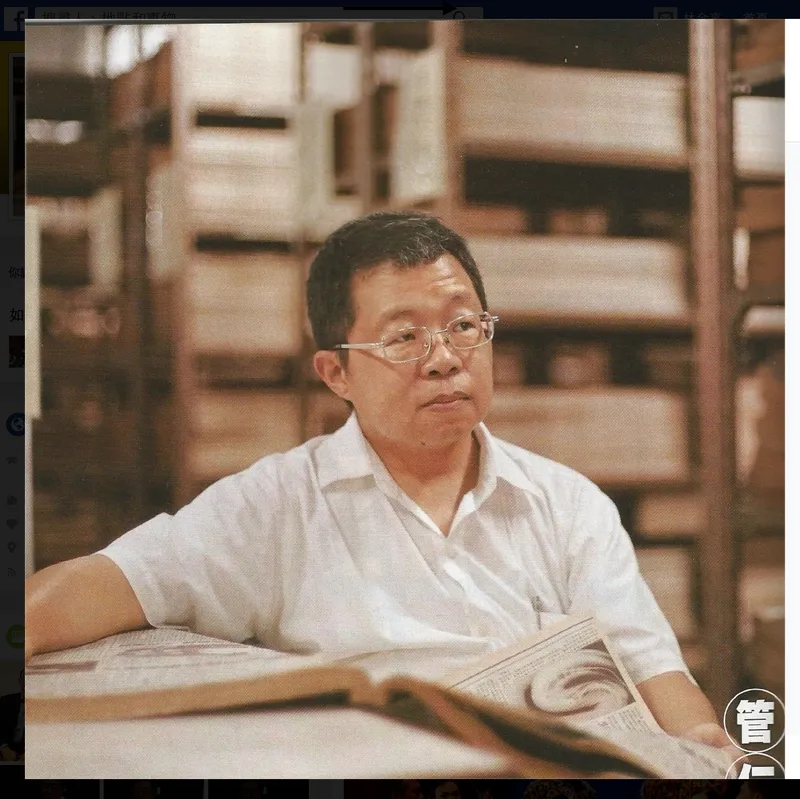
Let’s learn what constitutes brainwashing writing. First, look at the logical structure the writer intends to present in their article; this will give you a general idea of their confidence.
To borrow Kuan Jen-chien’s own preferred title, How to Crack Kuan Jen-chien’s Style of News Commentary, Taiwan’s Internal News Agency will tell you.
🎭 Deciphering the Steps of Guan Renjian’s Commentary
Guan Renjian first arbitrarily labels people as pro-China scholars, then he labels Li Yanqiu’s article as a dramatic “Taiwanese village-style” commentary, and thirdly, he divides military dependents’ villages into high-ranking officers and veterans. The entire piece is a constant process of labeling and division.
He always places himself in a favorable position, as if he were the exploited spokesperson for mainstream political correctness.
In reality, all those living in military dependents’ villages are the exploited, often told to “go back to Taiwan” by pro-independence activists—a very crude form of verbal violence. Yet, the pro-independence camp always seems to relish this, clearly revealing a character flaw.
Readers must understand clearly that all problems originate from class, not provincial origin; there are even more class issues among Hokkien (Taiwanese) people, which everyone ignores, yet they continue to attack military dependents’ villages. (Excerpt from Sui Ande’s statement.)
Of course, if attacking one’s own people makes one more popular, such people will never disappear from history, and their methods will only become more sophisticated.
💸 Questioning Class and Verification Issues
I ask you, Guan Renjian, Does Li Yanqiu’s military officer father, with his wealth and power, represent the ruling class, or does Tsai Ing-wen’s father, Tsai Chieh-sheng, have the wealth and power and represent the ruling class?
Did Tsai Ing-wen’s family stop using gas stoves when Li Yanqiu’s family was using coal briquettes?
Guan Renjian, in order to attack Li Yanqiu, only cites more negative claims he knows. Is this the logical thinking of a commentator, attacking without verification?
Has Guan Renjian personally investigated the lives of people outside Li Yanqiu’s family, or does he take fragments of stories he’s heard and consider them information?
Are people outside Li Yanqiu’s family destined to be poor to death, otherwise they wouldn’t meet Guan Renjian’s standards? What’s even more interesting is that Guan Renjian himself didn’t clearly explain in the article whether his own family used coal briquettes or gas.
Guan Renjian only mentioned “people”!! I even know that some people in Africa burn feces.
🏡 One-sided description of military dependents’ villages
This kind of article, which stands on moral high ground and attempts to satisfy itself by criticizing the shortcomings of others’ articles, might be suitable for Apple Daily’s digital weekly, and also for some self-proclaimed independent media that lack thorough investigation and impartiality, getting excited as long as they achieve their goals of attack and clicks.
However, such biased articles are probably only dared to be written by someone like Guan Renjian who doesn’t consider himself a resident of a military dependents’ village.
Probably because he himself never experienced life in a military dependents’ village, he can’t see the gang struggles, the cramped living conditions of a family, and the lack of privacy—the harsh realities of life in those villages.
But Kuan Jen-chien, on the one hand, you say the descendants of military dependents’ villages have been brainwashed into only seeing the bright side, yet you stand on the side of “outside the villages” and describe them as living in paradise, completely ignoring the dark side.
Kuan Jen-chien, are you envious or disgusted by military dependents’ villages? You’re confusing me.
Below is Kuan Jen-chien’s original article. Those unfamiliar with Mr. Kuan’s line of reasoning can use it in conjunction with the analysis steps above. It will definitely be helpful in learning how to criticize an opponent you dislike: “Facebook Post”.