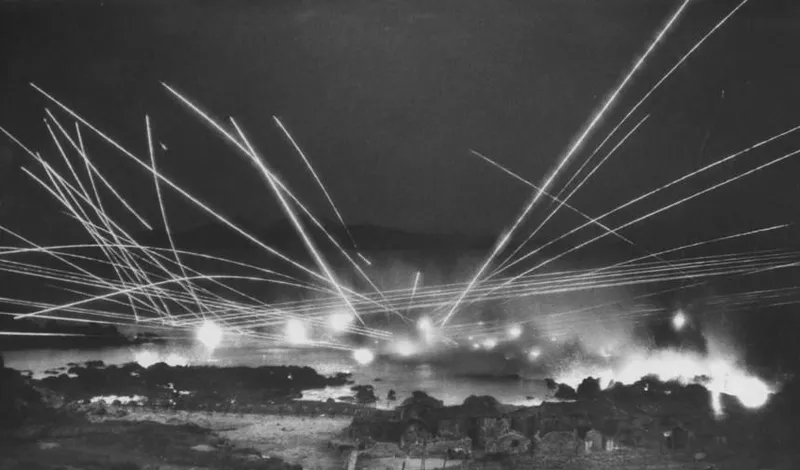
🇹🇼 Clarifying the Historical Facts of the 823 Artillery Battle: The Truth Behind the ROC Army’s Bombardment of Xiamen Railway Station and the Achievements of Artillery Group 600
(Republic of China Veteran / Yan Lejie, Author)
More than $60$ years have passed since the 823 Artillery Battle (Kinmen Artillery Battle). This battle consisted of two stages: The first stage was from August $23$ to October $5$ of the Republic of China Year $47$ (the year $1958$). On October $6$, PRC Defense Minister Peng Dehuai announced a ceasefire for one week, and on October $13$ announced an extension of the ceasefire for another week. The second stage lasted from October $20$ to January $7$ of Year $48$. In total, the battle lasted $80$ days.
The 823 Artillery Battle was a major event in the history of cross-strait relations. Over the years, both sides of the strait have published numerous research works on the subject. However, due to the lack of clarification by military historical units, the facts regarding the ROC Army’s bombardment of Xiamen Railway Station have remained shrouded in conflicting accounts and inconsistent explanations.
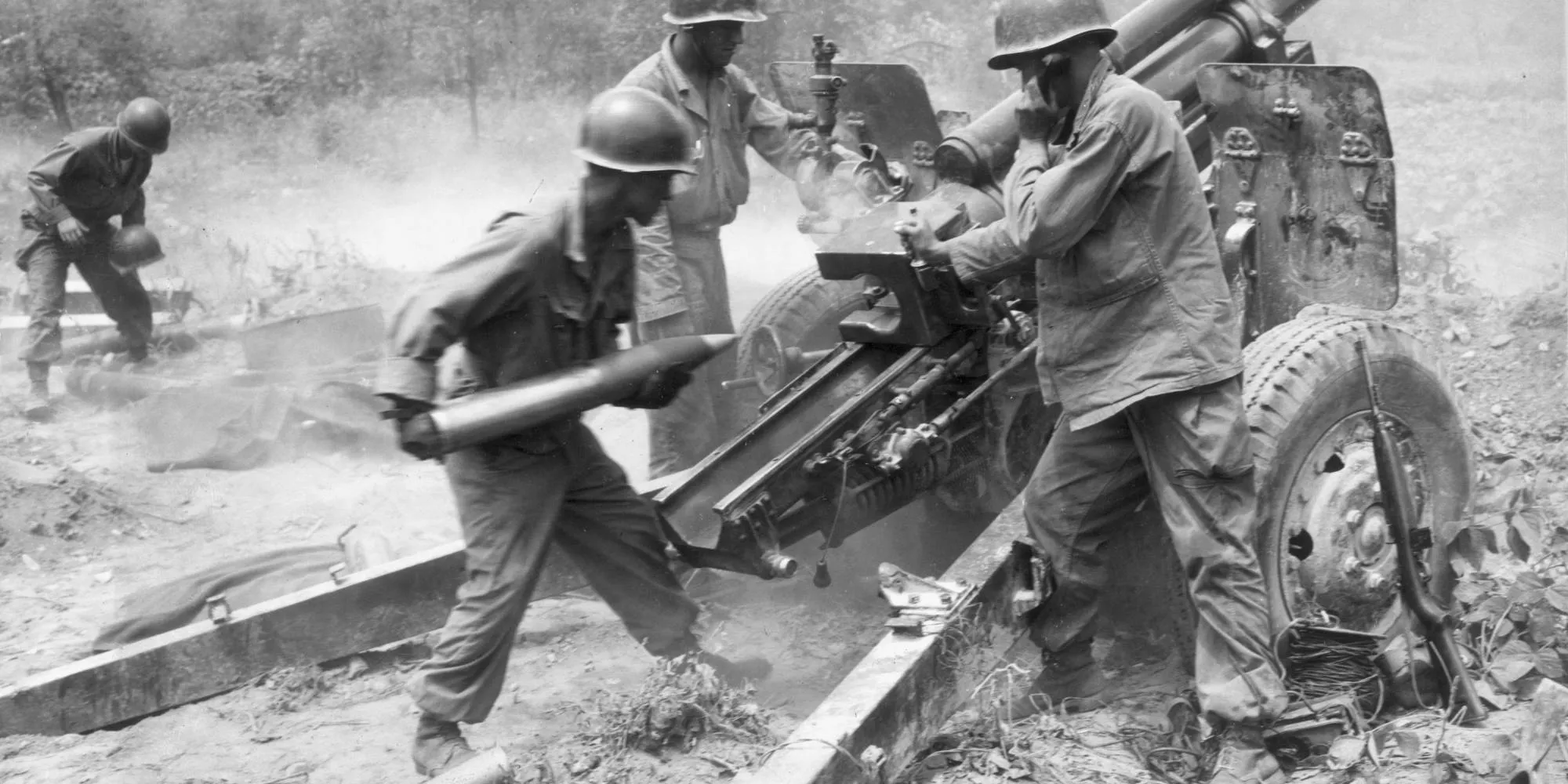
✅ The True Facts of the ROC Army’s Bombardment of Xiamen Railway Station: Artillery Group 600 Conducted TOT Fire with 155 Howitzer Cannons
According to the “General Liu Dinghan’s Memoirs of the 823 Artillery Battle at Kinmen,” first published on November $27$, Year $98$, and page $22$ (September $11$), the former Deputy Commander of the Kinmen Defense Command clearly records: “Starting at four o’clock in the afternoon, the enemy artillery also attacked our Big and Two positions and Lieyu, launching more than ten thousand shots. Our artillery then conducted counter-battery operations, fiercely attacking their important positions, hitting Xiamen Railway Station and nearby enemy military camps.” This record clearly proves that the date of the ROC Army’s bombardment of Xiamen Railway Station was September $11$, earlier than the arrival date of the first batch of 8-inch howitzers on September $18$, directly refuting that 8-inch howitzers ever bombarded Xiamen Railway Station.
According to records extracted from page $1021$ of the compilation, from the memoirs of Yan Fuoyuan (rank not specified) of Artillery Group $600$ regarding the Kinmen Artillery Battle (September $11$):
“…ordered on this day from $16$ hours $12$ minutes to $17$ hours $18$ minutes to conduct unobserved hasty fire against Xiamen Railway Station using Companies $1$ and $2$ of Battalion $691$ and Company $1$ of Battalion $692$. The process overview is as follows:
- First divided the station area into three points (PC1190-0680, $1210-1690$, $1250-0710$) for concentrated fire.
- Selected $1$ verification point near the line of fire (a small temple on the east coast of Xiamen Island) and ordered each company to conduct precise verification on the $10$th afternoon.
- All initial velocity errors and meteorological corrections were accurately calculated before firing.
- Requested Lieyu artillery to conduct active suppressive fire against the enemy artillery attacking our group.
- As Lieyu artillery began firing, Company $3$ of Battalion $691$ provided cover. It was ordered to first fire at target E124 near Tiger Mountain, then take advantage of the chaotic cross-fire between enemy and our artillery to conduct TOT (Time on Target) fire with simultaneous impact.
After firing, based on aerial reconnaissance and intelligence reports: the results were excellent, with the most significant achievement being the destruction of one railroad turntable, killing and wounding more than $700$ enemy troops and civilians. The only shortcoming was the firing of only $20$ volleys (expending $240$ rounds), which was slightly insufficient firepower, and subsequent continued fire was not conducted, failing to achieve long-term paralysis of the enemy’s Xiamen-Amoy Railway.”
Further investigation of the original memoir submitted to the Ministry of National Defense on May of Year $48$ by Colonel Yan Fuoyuan, Commander of Artillery Group $600$, records: “At $17$ hours $40$ minutes on the $9th$, Commander-in-Chief Hu called me directly by phone and ordered me to fire on Xiamen Railway Station to punish the enemy’s madness, …”
Additionally, according to information found online in “Xiamen Local Records,” on September $11$ from $15$ hours $20$ minutes to $17$ hours $30$ minutes, the Nationalist troops from Kinmen bombarded Xiamen Railway Station, killing $2$ people (including $1$ on the track), destroying $18$ rails, $17$ cargo cars, $2$ rail switches, more than $50$ railroad ties, $4$ residential dormitories, $1$ apartment building, $2$ public security barracks, etc. Another undisclosed fact is the suspicion that at that time there was more than one company of People’s Liberation Army troops and large quantities of ammunition being unloaded at Xiamen Railway Station, which could have enabled the Nationalist troops to achieve spectacular results.
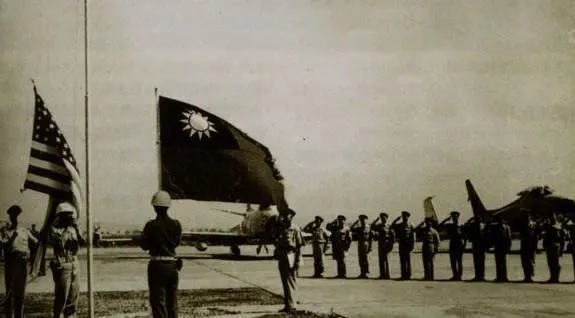 Republic of China and United States Flags During the Second World War
After Artillery Group $600$ was rotated back to Taiwan following the 823 Artillery Battle, the unit was immediately disbanded. As time passed, the battle achievements of Artillery Group $600$ were either stolen or obliterated, leaving heroes covered in dust with no one to question heaven. It is truly lamentable.
General Yan Fuoyuan (pen name Zhou Zhidao, a pun on “everyone knows” in Chinese) has written two books, “Record of the Actual Combat of Bombardment of Kinmen” and “Beacon Fires of Kinmen.” Additionally, please search online for “General Yan Fuoyuan, Commander of Artillery Group 600, Oral War History (Part I and II).”