
The Taipei Air Raid, also known as the Taipei Bombing, was the largest air raid on Taipei City, Taiwan during the Japanese occupation, conducted by the Allied forces of the United States and China during World War II. It occurred on May 31, 1945. Later, the Taipei Air Raid became a tool for many pro-independence activists to emphasize that Taiwan was the victim, using it to criticize the Kuomintang (KMT) as Taiwan’s enemy.
The truth is that those who remained in the Taipei metropolitan area were high-ranking “Japanese subjects” (or “subjects of the Japanese imperial government”). The Japanese left these half-hearted individuals in Taipei while they themselves fled long ago. These descendants of “great Japanese subjects” are now advocating for the rights of their abandoned ancestors to be Japanese citizens—absurd and laughable…
💣 The Myth of Bombing Targets and Impact Points
There’s a Taipei bombing map on Wikipedia, fabricated by some unknown “great Japanese subject,” claiming it shows the impact points of Taipei City. The map’s bright red color is intended to prove the relentless bombing of Taiwan by the Allied forces of the United States and China.
Nonsense! With such a dense bombardment, you’re treating it like several rows of machine guns firing simultaneously?!
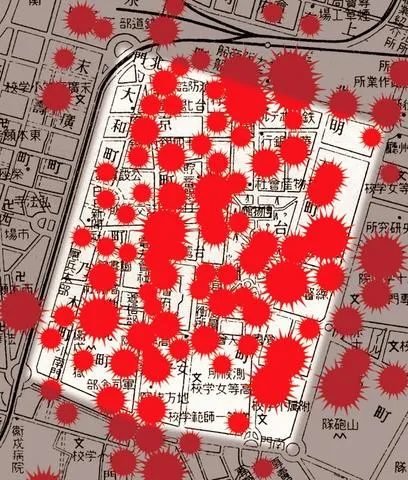 Caption: Taipei Bombing Map
The truth about the Taipei bombings is that the population density was low at the time, and buildings were scattered, resulting in a very low rate of friendly fire incidents by Allied aircraft. Furthermore, the densely packed red dots in the image above represent only a very small area, almost entirely the political center of the Japanese colonial government at the time. Who else would they bomb?!
The image below is a photograph actually taken by Sino-American Allied bombers. The weather was clear that day, with very high visibility. The smoke indicates that the bombing was limited to a few areas, and the number of bombers was also small.
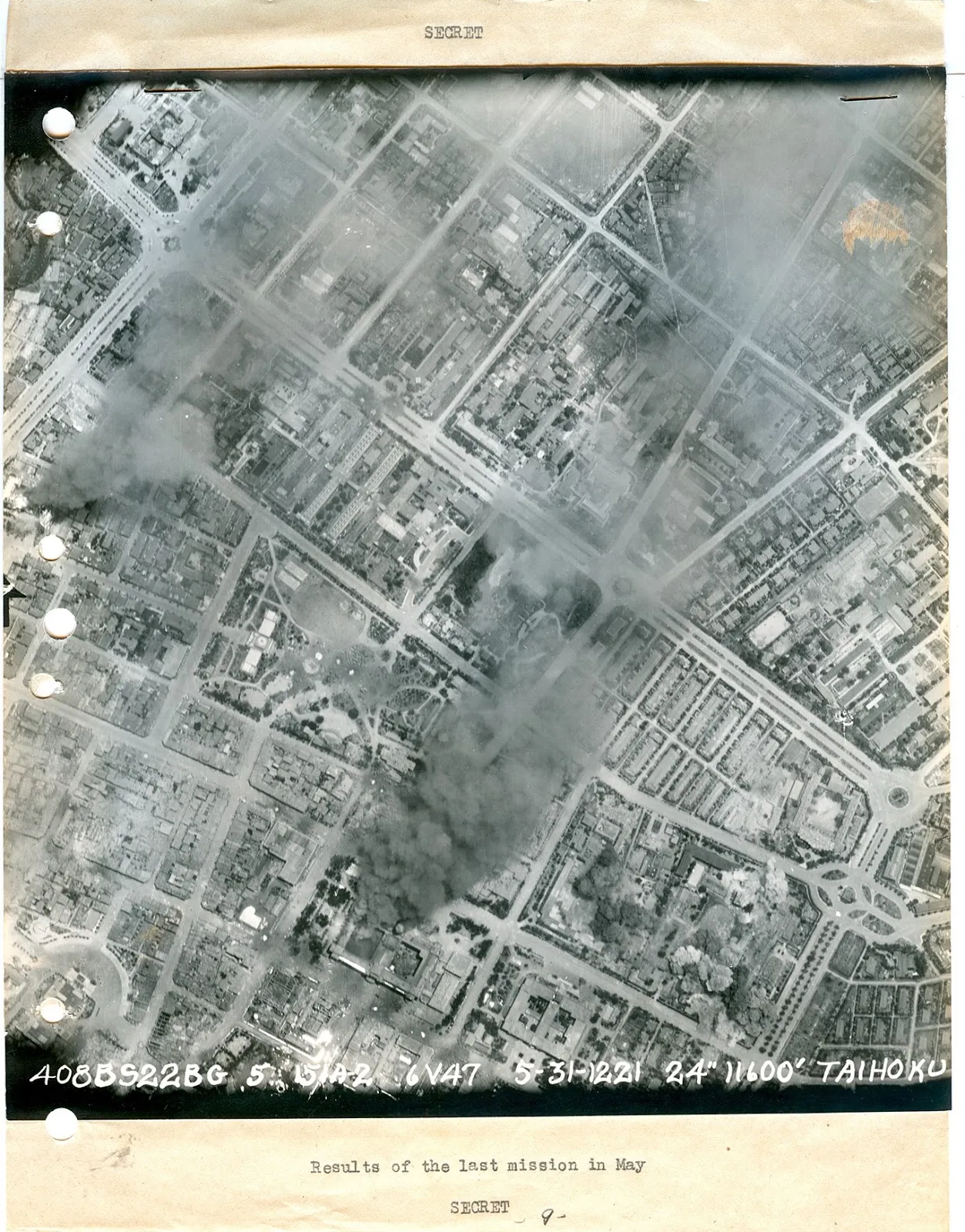 Caption: Sino-American Allied Bombers
Anyone with a modicum of intelligence can see from the image below that the bombing pattern is completely different from the cluster of red circles in the image above.
✈️ Bombing Accuracy and Civilian Casualties
Furthermore, as we can see from the historical photos below, aircraft of that era could fly at considerably low altitudes. Combined with the cloudless skies on the day of the bombing, the accuracy of the bombing was far greater than what is traditionally imagined from movies.
Moreover, air raid warning systems existed that year, allowing most Japanese to escape long beforehand. The Allied forces primarily bombed government buildings.
Even if a few civilians were accidentally injured, the number would be extremely small.
Because of air raid warnings and the fact that Taipei was primarily inhabited by wealthy people at the time (and it seems to still be), they could have easily escaped to safe places beforehand.
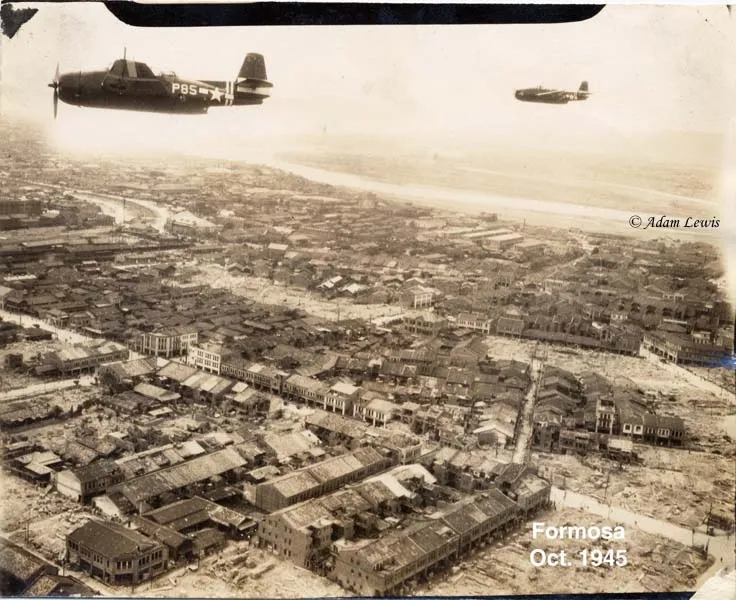 Caption: Actual Flight Record of Bombers
The common perception is that high bombing error rates were a problem in the European theater, where bombers were vulnerable to anti-aircraft fire, necessitating maintaining altitude within clouds for safe bombing.
However, the situation in Taiwan was entirely different. Furthermore, when American forces bombed Japanese military facilities, the Japanese had long since abandoned the Taiwanese people and fled. With no one to retaliate, the Allied bombers were practically bombing the Taiwanese at ground level.