The last emperor of the Qing Dynasty in China, Puyi, mentioned in his autobiography From Emperor to Citizen a young prince named “Xiaogu,” a descendant of Yixin, Prince Gong Zhong, under the Daoguang Emperor, Yu-chan (November 28, 1923 – July 8, 2016).
When Prince Xiaogu was 92 years old, he was interviewed for a documentary Aisin-Gioro Part II: Jinghua is Not Old Jinghua — Anecdotes of the Last Emperor Puyi”s Twenty Years. A small segment about a Taiwanese person in it caught my interest.
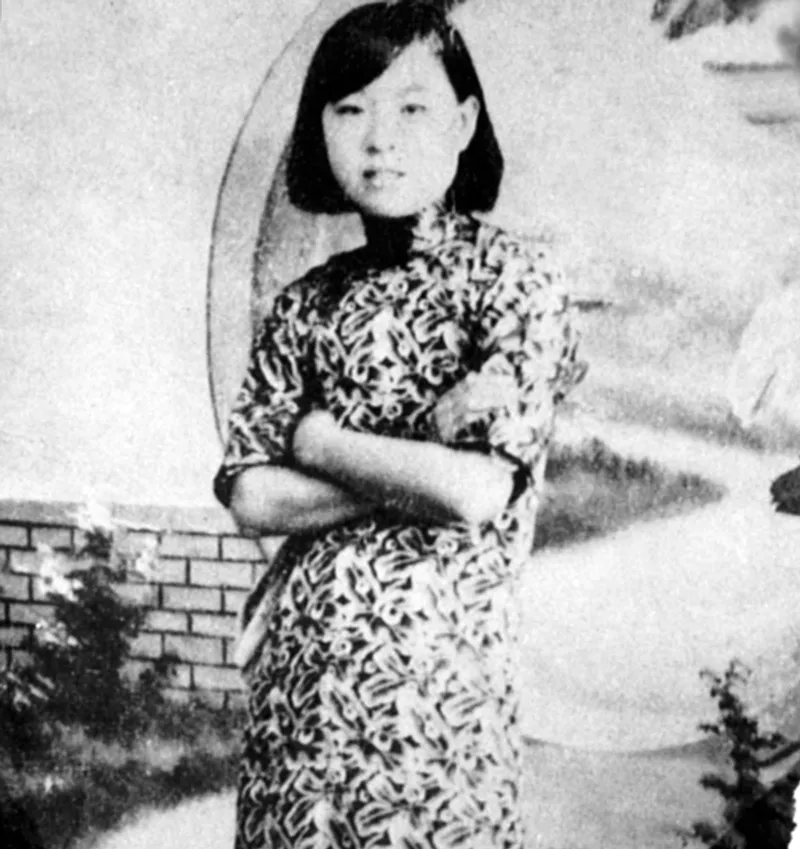
At that time, Puyi, who was serving as a puppet emperor controlled by the Japanese in Manchukuo, had his beloved concubine Tan Yuling (August 11, 1920 – August 14, 1942, Manchu, Tatara clan, concubine of Puyi, the last emperor of the Qing Dynasty) urgently needing treatment for symptoms such as hematuria and bloodshot eyes.
Puyi, distrusting Western medicine, sought one of the two elderly traditional Chinese medicine doctors in the Imperial Academy of Medicine, Tong Chenghai (Tong Kuoquan, courtesy name Chenghai, from Beijing, imperial physician family, 1890–1962), for diagnosis and treatment.
Initially, when Tan Yuling took Dr. Tong”s prescription, it was indeed effective, and her hematuria stopped.
However, Prince Xiaogu said that Puyi had a habit: he would always examine the prescription regardless of who prescribed the medicine, even though he had only read a few days of medical books. After Puyi reviewed Tong Chenghai”s prescription, he felt the dosage was too strong, so he switched to a milder prescription from another elderly traditional Chinese medicine doctor, which resulted in hematuria again. At this point, Puyi turned back to Dr. Tong, but it was too late.
Later, Puyi had no choice but to summon Huang Zizheng, who studied Western medicine and was assigned by the Japanese.
Huang Zizheng, upon seeing Tan Yuling”s condition, contacted Changchun Hospital, whose director at the time was the Japanese physician Onodera. That evening, after an injection, Tan Yuling passed away. Puyi always believed she was intentionally killed by the Japanese.
Currently, Wikipedia states that Tan Yuling died of typhoid fever, which clearly deviates from Prince Xiaogu”s personal account. In fact, the term “typhoid fever” (傷寒) in China has ancient origins, but it differs from typhoid fever (Typhoid Fever) as understood in Western medicine, which is caused by enteric fever. The Chinese term referred to all external febrile illnesses.
At the time, Lieutenant General Yoshioka Yasunao, the Japanese “Goyogakari” (personal attendant) managing puppet emperor Puyi, originally wanted to select a Japanese woman to be Puyi”s empress, but he gave up when Puyi had already chosen Tan Yuling in Beijing.
Puyi believed that this action caused Yoshioka to be constantly dissatisfied, which is why, when Tan Yuling was sent to Changchun Hospital for treatment, Yoshioka went to consult with Onodera for some unknown reason, after which an injection was given, and she died before dawn. This led Puyi to strongly suspect that Yoshioka ordered the poisoning of Tan Yuling.
The 92-year-old Prince Xiaogu finally added that Puyi reluctantly sought medical help from the Japanese, essentially meaning he was desperate for any cure, but no one had proof of poisoning.
According to Wikipedia, Huang Zizheng was one of the few Taiwanese who could graduate from a university medical school during the Japanese colonial period, and he was even appointed by the Japanese military as Puyi”s private imperial physician. This suggests that the Japanese military not only highly trusted Huang Zizheng but also had the intention of “governing China through Chinese.”