🇯🇵 🇹🇼 Colonial Worship Pathology: The Absurdity of Talking About Subjectivity While Imitating Japan
A few days ago, I posted a comment on my Facebook fan page: “On the one hand, they talk about establishing Taiwanese subjectivity, but on the other hand, they imitate everything Japan does.” This resonated with many.
We all feel that the minds of some modern Taiwanese are sick. They haven’t even learned many of the good qualities of the Japanese, yet they fantasize about how wonderful it would be to be Japanese. This burgeoning pathological colonial worship mentality is unbearable to witness.
The Glorified and Forgotten History of Colonial Bloodshed
The Japanese occupation lasted only about 50 years, roughly two generations.
The first generation, the first half, survived bloodshed and violence. Even in the latter half, the majority of Taiwanese, who were poor and powerless, were exploited in various ways. Ultimately, the “righteous cause of the Japanese Empire” was used to send young Taiwanese to the battlefield as cannon fodder.
Of course, wealthy and powerful Taiwanese were exceptions, such as landowners and obedient merchants, but they were a minority, roughly as rare as today’s conglomerates and politicians, existing like figures to be looked up to. For example, National Taiwan University, which continued to operate after Taiwan’s retrocession, actually only enrolled a mere 200 Taiwanese students during the 50 years of Japanese occupation.
In those times, you might have been just a farmer, a small farmer bullied by landlords, or even someone who couldn’t afford rent and had to carry manure. All this changed after the Kuomintang implemented the $375 rent reduction and the “land to the tiller” policy, reversing the dire fates of many.
In contrast, in recent years, under the DPP government’s constant brainwashing through cultural pro-independence propaganda, Taiwanese people have become as if they enjoyed the same treatment as the Japanese in the past, completely forgetting the painful struggles of their ancestors under Japanese rule.
In their eyes, you were never Japanese, just Taiwanese, or perhaps given the title of “Imperial Subject” later for easier exploitation—just a nicer-sounding “outsider”… because the Japanese already knew you loved money, feared death, and cared about face.
Japanese perspectives on historical architecture differ greatly from Taiwanese perspectives
Actually, I’ve probably been to Japan more often than most people. While traveling there, I’ve seen many old buildings constantly being demolished and rebuilt in a more contemporary style, designed to meet people’s real needs. Besides the ruthless demolition of cookie-cutter traditional houses, even 18th-century Western-style train stations were torn down without hesitation. The key point is that many of these rebuilt areas are transformed into open spaces, allowing the public to freely use them.
I have repeatedly stated from the past to the present that I am not simply against present-day Japan, but rather that I cannot forget what the Japanese did to the Taiwanese people. Ironically, under the DPP government, the number of people who have forgotten is increasing. They even seem to fear that you haven’t forgotten, so they constantly brainwash you with self-glorified historical content.
Resurrected Relics of the Japanese Occupation Era
In recent years, many dilapidated relics from the Japanese occupation era on the island of Taiwan have been restored with vast sums of money by politicians, some of which can be described as completely rebuilt. Many of these are the quantifiable buildings I mentioned earlier, whose architectural style has no preservation value, and even the people who lived there are of little importance, yet some Taiwanese treat them like treasures.
Urban aesthetics are not simply about building a brand-new retro building in one place; it requires a holistic spatial design that considers the entire environment. This is the biggest misconception that Taiwanese people have when developing cultural parks. This results in bizarre visual effects that completely clash with the surroundings. Politicians are simply building for the sake of building, completely disregarding harmony.
Moreover, those Japanese-style houses are practically everywhere in Japan. If you love Japanese culture, wouldn’t you go to Japan for a few days and still not see enough?
The Restoration of Martial Law in Cultural Parks
These so-called “cultural parks” are actually mostly low-grade buildings from the Japanese occupation era, many of which are already in a state of disrepair.
However, the government has spent billions, perhaps even tens of billions of taxpayers’ money, on various projects to essentially rebuild them into so-called “cultural parks,” employing a bunch of idle staff, yet the actual number of tourists they attract is often pitifully low.
Furthermore, as if they’re afraid of Taiwanese people, many spaces are completely enclosed by high walls, restricting public access to “admiration” only during designated times.
They want to be Japanese all the time, but haven’t even learned a hair’s breadth of Japanese culture; they only live in their own imaginations. In contrast, many of our “cultural parks” give me a feeling of being back in the martial law era, as if I was only allowed entry with “favor.”
The key is the cash flow from construction projects
We all know that construction projects generate cash flow, including subsequent maintenance and on-site staff – all of which cost money. Yet, this money is often wasted on meaningless projects, and may even be used to give back to construction companies and friends/relatives.
That’s why we wonder how these job openings are created? Why do we never know? It seems like all these cushy positions are already filled… Of course, this is just my feeling and may not reflect reality.
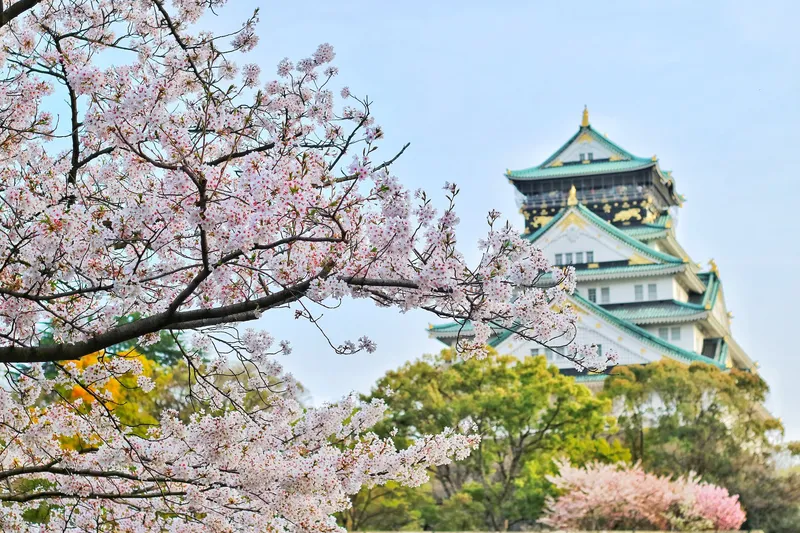
On the other hand, what about the Japanese? Aside from very famous buildings and important cultural heritage sites like castles, everything else is simply demolished and rebuilt.
So, if you love Japanese architecture so much, why don’t you just be a proper Japanese citizen?
On the island of Taiwan, there are many vulnerable groups and social problems awaiting government attention, such as education, healthcare, poverty, and environmental protection. The government should pay more attention to these issues and invest more resources and energy in solving them, instead of wasting taxpayers’ money on cultural parks that have no real value and are more for cultural brainwashing.