
Excerpts from the Treaty of Peace between the Republic of China and Japan (Treaty of Taipei)
The Treaty of Peace between the Republic of China and Japan, commonly known as the Sino-Japanese Peace Treaty or the Treaty of Taipei, serves as the definitive legal instrument terminating the state of war between the Republic of China (R.O.C.) and Japan following World War II.
Signed at the Taipei Guest House on April 28, 1952—the same day the San Francisco Peace Treaty came into effect—it officially ended the hostilities and laid the foundation for post-war diplomatic relations. Under this treaty, Japan recognized that it had renounced all rights, title, and claim to Taiwan and the Pescadores (Penghu), as well as the Spratly and Paracel Islands, in accordance with the San Francisco Peace Treaty.
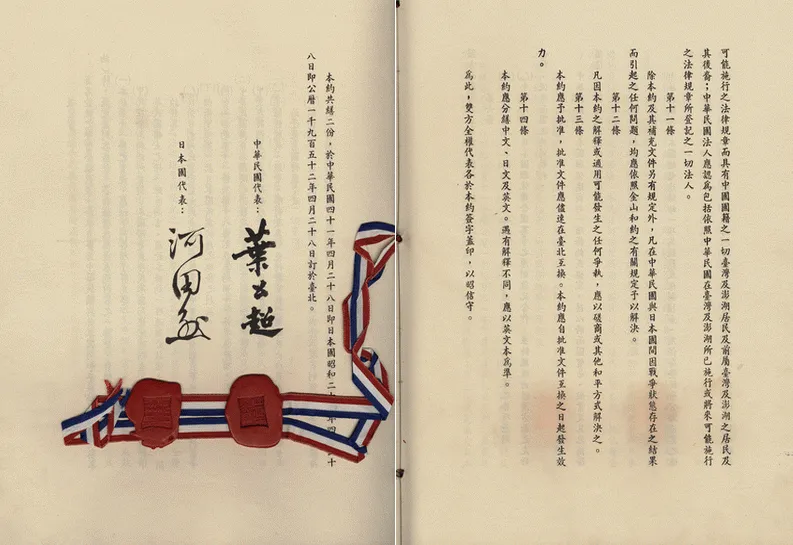 The formal document of the Treaty of Peace between the Republic of China and Japan.